Monday, 20 February 2017

Oman Day 3; Shannah & Ash Shuwaymiyyah

Shannah
After dipping on crab plover the previous day we decided to stay overnight in Filim and try again at Shannah early morning. We were on site for first light as the tide was just falling from high, but again there was no sign of any crab plovers. Scanning the waders produced the same selection as yesterday only today there was the addition of Great Knot, with a couple of individuals among the Bar-tailed Godwits. 2 Spoonbill present were also the first of the trip.
  The highlight of the morning without doubt was a cracking male Pallid Harrier which was hunting over the mangroves. At times it flew fairly close to where we were watching it from. Also in the mangroves were a number of Asian Desert Warblers, although we only saw one.
-Pallid Harrier
-Great Knot & Bar-tailed Godwit
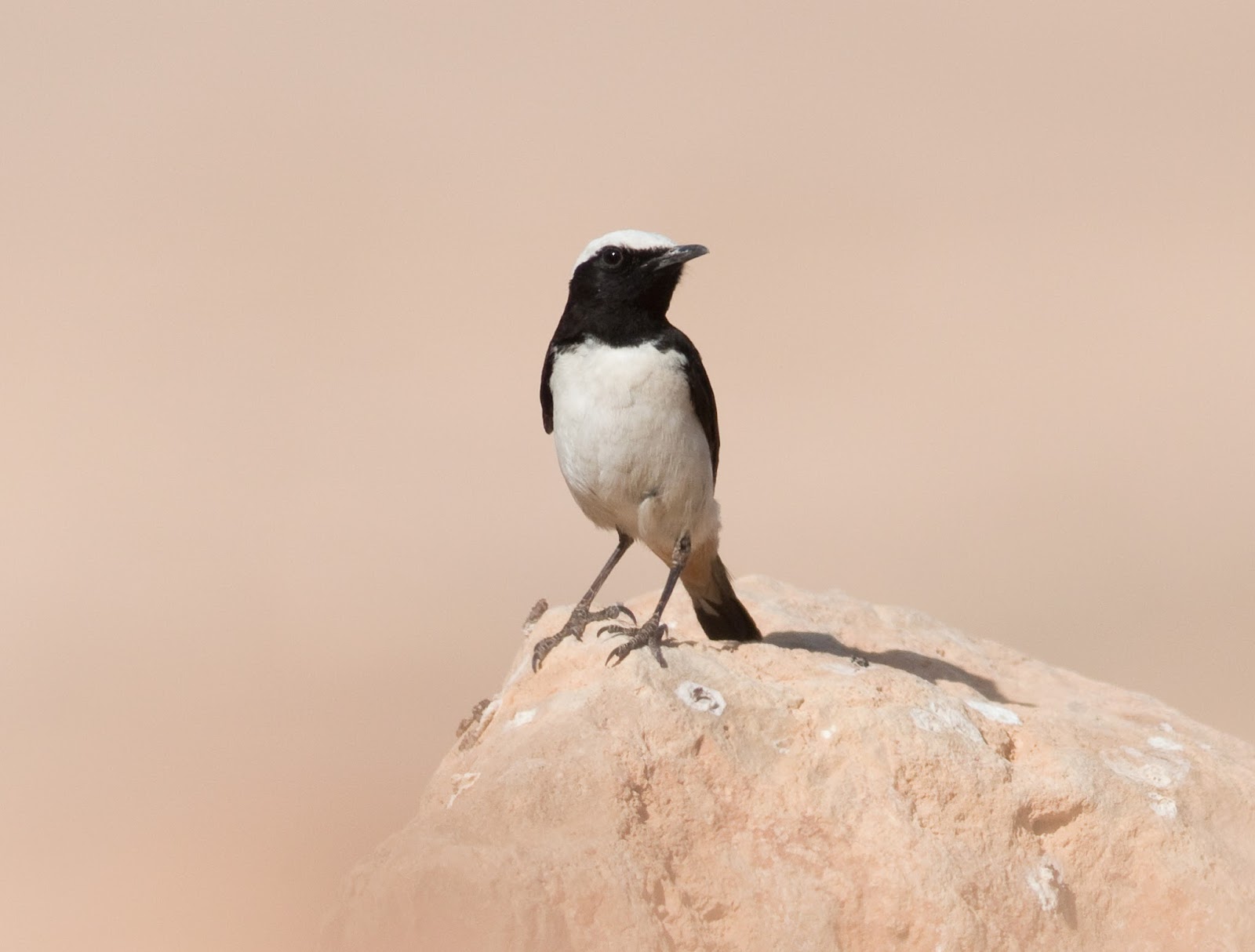
  Once we decided there was no chance of crab plover we continued to head south. The journey south was fairly long and involved large swathes of desert with little birdlife. We stopped to check a small abandoned village but failed to find anything new, although a small group of Small Cupid Blue Butterflies was quite interesting. The highlight of our journey south was a stunning male South Arabian Wheatear which was picked out at the side of the road, and was quickly joined by a female. It showed well by the roadside before flying off into the mountains.
-Southern Grey Shrike
-Desert Wheatear
-Small Cupid
-South Arabian Wheatear

Species List:
Shannah: Great Knot*, Spoonbill, Pallid Harrier, Ringed Plover, Marsh Harrier, Brown-necked Raven, Asian Desert Warbler, Gull-billed Tern, Common Sandpiper, Curlew Sandpiper, Bar-tailed Godwit, Grey Plover, Kentish Plover, Sanderling, Lesser Sand Plover, Greater Sand Plover, Dunlin, Oystercatcher, Greenshank, Redshank, Western Reef Egret, Grey Heron, Sooty Gull, Heuglins Gull, Slender-billed Gull, Greater Flamingo, Red Fox,
Driving: Osprey, Brown-necked Raven, House Sparrow, Feral Pigeon, Greater Hoopoe Lark, Desert Wheatear, Laughing Dove, Egyptian Vulture, Southern Grey Shrike, Heuglins Gull, Greater Crested Tern, Northern Wheatear, South Arabian Wheatear*, Common Kestrel, Green Sandpiper, Long-tailed Blue,

Ash Shuwaymiyyah Town
  Our final destination for the day was the town of Ash Shuwaymiyyah. It was late afternoon when we arrived. We first stopped at the beach where we had our first seabirds of the trip, including Masked Booby diving close to shore, and a single Socotra Cormorant flew south. A few Common and Greater Crested Tern were also fishing close in shore. A small pod on Indo Pacific Humpbacked Dolphin also swam past close in shore, which were a nice bonus.
  On the southern side of the town there was a small area of wetland. We pulled over after we spotted a Pheasant-tailed Jacana on the pond-side vegetation. Once we started birding the pond we picked up more wetland species, including our first Indian Pond Herons of the trip. We also had more Clamorous Reed Warblers and an array of commoner wetland species; Greater Flamingo, Garganey and Ruff.
-Masked Booby
-Desert Wheatear
-Clamorous Reed Warbler
-Red-veined Dropwing

Species List:
Ash Shuwaymiyyah Town: Masked Booby, Socotra Cormorant, Common Tern, Desert Wheatear, Greater Crested Tern, Sandwich Tern, Heuglins Gull, Sooty Gull, Pheasant-tailed Jacana*, Garganey, Ruff, Yellow Wagtail, Pied Wagtail, Grey Heron, Greater Flamingo, Clamorous Reed Warbler, Common Sandpiper, Coot, Teal, Feral Pigeon, House Sparrow, Indian Pond Heron, Indo Pacific Humpback Dolphin, Vagrant Emperor,

Ash Shuwaymiyyah Wadi
Before dark we headed up into the Wadi adjacent to the town, to a vegetated area known as the hanging gardens. Here we waited for Lichtenstein’s Sandgrouse to come in and drink. A small flock appeared in the gloom at around half 6 and drank for around 10 mins before flying back off into the dark. Hume’s Owls could be heard in along the cliffs along the side of the Wadi, and scanning the valley with a torch provided us with views of a Red Fox and Mountain Gazelle.
-Lichtenstein's Sandgrouse

Species List:
Ash Shuwaymiyyah Wadi: Chiffchaff, House Martin, Rock Martin, Lichtenstein’s Sandgrouse, Red Fox, Goitered Gazelle,

Sunday, 19 February 2017

Oman Day 2: Ras Al Hadd & Barr al Hikman


We spent the first hours of light birding around our campsite. A Southern Grey Shrike was the first shrike of our trip. We continued to find species which were common in the desert, such as Red-tailed and Desert Wheatear, as well as more Crested Larks. We also flushed a couple of Grey Francolin from the bushes surrounding our campsite, but our attempts to relocate them were unsuccessful.

Species List:
Ras Al Hadd: Southern Grey Shrike*, Grey Francolin, Red-tailed Wheatear, Osprey, Desert Wheatear, Crested Lark,

Ras Al Jinz Turtle Sanctuary
We decided to start our day at the nearby turtle sanctuary. Sadly we arrived too late to see any turtles but there were large numbers of tracks up and down the beach which indicated they had been present during the night. By far the most abundant species at the site were the Sooty and Pallas Gulls, which formed large flocks roosting on the beach. The cliffs alongside the beach were a good spot to get views of Brown-necked Raven, a species common by roadsides. Also along the cliffs was the only Blue Rock Thrush of our trip.
  Once we had walked along the beach, and with the morning warming up, we decided to check the desert behind. The vegetation cover was limited here, with no trees and only low bushes. We added Desert Warbler, Desert Lark and Isabelline Wheatear to our collection of desert species, as well as the regular Red-tailed Wheatear, Desert Wheatear and Crested Lark. A surprise addition to our list was a Quail. The bird looked to have come in off the sea, before crashing into the desert where we subsequently lost it. There were also a number of lizards and gecko species among the rocks and shrubbery.
-Sooty Gull
-Brown-necked Raven
-Blue Rock Thrush
Pallas's, Sooty & Heuglins Gull
-Asian Desert Warbler
-Carter's Semaphore Gecko
  Once the morning had fully warmed up we began our journey south to Shannah where we hoped to be able to see a number of wader species. On our drive south we passed through a number of different habitats and made a couple of stops to check out areas of scrub or wetland. The first area of Wetland we checked had a small group of Great Flamingos using it, as well as an Osprey. Desert areas we checked had more Little Green Bee-eaters and Black-crowned Sparrow Larks, as well as our first Greater Hoopoe Lark of the trip. A Vagrant Emperor was our first dragonfly of the trip.
-Dromedary Camel
-Black-crowned Sparrow Lark
-Crested Lark
-Tawny Pipit
-Greater Hoopoe Lark

Species List:
Ras Al Jinz Turtle Sanctuary: Brown-necked Raven*, Desert Lark*, Blue Rock Thrush, Quail*, Rock Martin, Isabelline Wheatear, Asian Desert Warbler*, Red-tailed Wheatear, Desert Wheatear, Crested Lark, Pallas Gull, Sooty Gull, Laughing Dove, Heuglins Gull, Kentish Plover, Great Cormorant,
Driving: Gadwall, Greater Flamingo*, Osprey, Pallas Gull, Tawny Pipit, Crested Lark, Caspian Tern, Laughing Dove, Little Green Bee-eater, Black-crowned Sparrow Lark, Curlew, House Crow, Western Reef Egret, Sooty Gull, Heuglins Gull, Great Cormorant, Greater Hoopoe Lark*, Southern Grey Shrike, Vagrant Emperor, Dromedary Camel,

Shannah
We arrived at Shannah late morning/early afternoon. We first headed to the fish port where there were thousands of Sooty Gulls and other large white headed gull species. A scan out into the bay itself produced 3 Black-necked Grebes, which were an unexpected bonus to our trip list.
  We tried to head down the coast but found it difficult without a 4x4. As a result we decided to head back to the mudflats at Shannah and scope out waders from there. Our main target was crab plover but we were disappointed to find that there were none around. There were plenty of other waders though including both Greater and Lesser Sand Plover, as well as Marsh and Terek Sandpiper. Greater Flamingo was also present along the shoreline and a Gull-billed Tern flew over. The mangrove themselves were full of Fiddler Crabs.
-Terek Sandpiper
-Fiddler Crab

Species List:
Shannah: Sooty Gull, Heuglins Gull, Slender-billed Gull, Great Cormorant, Grey Heron, Common Sandpiper, Black-necked Grebe, Curlew, Desert Wheatear, Dunlin, Turnstone, Grey Plover, Bar-tailed Godwit, Curlew Sandpiper, Terek Sandpiper, Sanderling, Little Stint, Redshank, Greenshank, Kentish Plover, Greater Sand Plover, Lesser Sand Plover, Marsh Sandpiper, Gull-billed Tern, Greater Flamingo, Oystercatcher, Fiddler Crab,

Filim
After a couple of hours at Shannah with the tide coming in and still no sign of any crab plovers, we headed down the coast to the small town of Filim. Here there was more marsh, although not really mudflat and we hoped that the crab plovers might have moved down the coast. They had not. There continued to be good numbers of waders however, including more Terek and our only Broad-billed Sandpiper of trip.
  We also checked the mangroves behind the mudflats for any other birds. Another Gull-billed Tern was fishing here and showed much better than the bird at Shannah. The mangroves themselves were alive with the sound of Clamorous Reed Warbler and we had brief views of a couple of individuals as they flew between patches of reed. A Common Kingfisher was also present here.
-Greater Flamingo

Species List:
Filim: Broad-billed Sandpiper*, Gull-billed Tern, European Starling, Desert Wheatear, Greater Flamingo, Western Reef Egret, Great White Egret, Little Stint, Terek Sandpiper, Dunlin, Curlew Sandpiper, Greenshank, Redshank, Lesser Sand Plover, Greater Sand Plover, Kentish Plover, Curlew, Oystercatcher, Common Sandpiper, Bar-tailed Godwit, Grey Plover, Grey Heron, Common Kingfisher, Clamorous Reed Warbler*, Slender-billed Gull, Heuglins Gull, House Sparrow, Eurasian Teal, 

Saturday, 18 February 2017

Oman Day 1: Muscat & Ras Al Hadd

Our flight to Muscat from Heathrow took 8 hours. We set off at 20.00 on the 17th and, as a result of the 4 hour time difference, arrived at around 7.00 the following morning. It took us over 2 hours to get through customs and pick up the car but were finally ready to go just before 10.00 that morning. The first birds we saw besides Feral Pigeon were Common Mynas and Laughing Doves, which we found to be extremely abundant in the capital. We decided to drive through to a small park/nature reserve on the eastern side of the city called Al Qurm. Our drive across provided us with the first of our trip target species in the form of Indian Roller, which were fairly abundant along grassy verges and gardens in the capital.

Al Qurm
The park itself did not open its doors until 15.00 so we decided to set up on the adjacent beach and bird around there. The birding was easy here, with both Greater and Lesser Sand Plovers, Slender-billed and Heuglin’s Gulls and an assortment of Terns; Saunder’s, Greater Crested and Lesser Crested. From the gull flock we picked out a superb full summer plumaged Pallas’s Gull, which was one of the highlights for the whole trip. Looking behind us out over the reserve itself gave us our first wetland species such as Great White and Western Reef Egret. The scrub alongside the shore also contained Crested Lark, which were extremely approachable. House Crow was also present in the area, already racking up the lifers. 
-Saunder's Tern
-Slender-billed Gulls 
-Greater & Lesser Crested Tern
-Greater Sand & Kentish Plover
-Pallas's Gull
-Crested Lark
After an hour or so biding the beach we decided to move back bird the outskirts of the park. We walked around the perimeter of the park where we managed to pick up a surprising number of northern Oman species. Little Green Bee-eater was abundant, as was Purple Sunbird and both Red-vented and White-cheeked Bulbul. A small grassy football pitch provided Red-wattled Lapwing and Grey Francolin, although the former was fairly common of rough areas of ground around Muscat. Continuing to work the bushes and looking into the park itself produced more results, with Isabelline Shrike, Indian Silverbill, Graceful Prinia and Eastern Eastern Black Redstart all using the area.
-Purple Sunbird
-White-cheeked Bulbul
-Red-vented Bulbul
-Little Green Bee-eater
-Indian Roller
By lunchtime we decided to head off east, our target destination being Ras Al Hadd on the north-east coastline. We made a supply stop in Oman and topped up on food and water. The drive across took between 2-3 hours, but we picked up more species on the drive across. Egyptian Vulture was the only raptor in any abundance, but we did also have a Short-toed Eagle. We also had our first wheatears of the trip with a cracking male Variable Wheatear a nice surprise, several Red-tailed and a female Desert Wheatear all sat up on the roadside.
-Variable Wheatear
-Red-tailed Wheatear

Species List:
Al Qurm, Muscat: Common Myna, House Sparrow, Indian Roller, Laughing Dove, White Wagtail, Collared Dove, Lesser Crested Tern, Greater Crested Tern, Saunder’s Tern, Sandwich Tern, Grey Heron, Western Reef Egret, Great White Egret, Kentish Plover, Greater Sand Plover, Lesser Sand Plover, Curlew, Curlew Sandpiper, Dunlin, Bar-tailed Godwit, Greenshank, Terek Sandpiper, Ringed Plover, Ring-necked Parakeet, Isabelline Shrike, Osprey, Crested Lark, Common Teal, Swallow, Rock Martin, White-cheeked Bulbul,  Red-vented Bulbul, Indian Silverbill, Slender-billed Gull, Pallas’s’s Gull, Heuglin’s Gull, Red-wattled Lapwing, Grey Francolin, Eastern Black Redstart, Little Green Bee-eater, Graceful Prinia Chiffchaff, Black-headed Gull, Purple Sunbird, House Crow,
Driving: Indian Roller, Variable Wheatear, Egyptian Vulture, Short-toed Eagle, Marsh Harrier, Collared Dove, Desert Wheatear, Little Stint, Black-winged Stilt, Redshank, Greenshank, Red-tailed Wheatear, Sooty Gull,

Ras Al Hadd
Once we arrived at Ras Al Hadd it was already early evening and the light was beginning to fade. We checked the shoreline for waders and gulls, which produced a good number of common waders plus Caspian Tern, Sooty Gull and more Pallas’s Gulls. A check of the scrub behind the shore, even in the low light, produced a good number of commoner desert species; Tawny Pipit, Black-crowned Sparrow Lark and more Desert Wheatears.
We chose to camp in a small area of desert just inland from Ras Al Hadd. By the time we camped it was already dark but a search of the scrub found us a number of Ground Geckos, a Worm Snake and a Saw-scaled Viper. you define this to species in the list? The Worm Snake is particularly impressive as they very rarely come up above ground.
-Middle Eastern Short-fingered Gecko
-Hooked Thread Snake
-Wahiba Spider
-Sochurek's Saw-scaled Viper

Species List:

Ras Al Hadd: Tawny Pipit, Caspian Tern, Black-crowned Sparrow Lark, Oystercatcher, Greenshank, Kentish Plover, Greater Sand Plover, Lesser Sand Plover, Curlew Sandpiper, Whimbrel, Bar-tailed Godwit, Curlew, Crested Lark, Grey Heron, Desert Wheatear, Laughing Dove, Feral Pigeon, Slender-billed Gull, Pallas’s Gull, Sooty Gull, House Sparrow, Sandwich Tern,

Sunday, 5 February 2017

Scarborough Weekend

During February, with fewer people going to Spurn for the autumn, there is an annual Spurn night out in Scarborough for people to see friends that they might not have seen for some time. Besides the drinking there were some good birds to be seen over the weekend too. 
On the Saturday afternoon when I arrived I headed off to the harbor to look at the wintering Great Northern Diver and Black Necked Grebes. They were both showing extremely well, giving crippling views to be honest. Guillemot and Rock Pipit also made a nice collection in what was a very busy harbor setting. 
The morning after we headed up on to the tops to feed Mediterranean Gulls and scan over the bay. Whilst scanning we were directed to a couple of Long-tailed Ducks in with a flock of Common Scoter. The Mediterranean Gulls showed extremely well, readily coming down to the bread we were throwing for them. In the end we probably had around 10 birds of all different ages.
In the afternoon we headed off to Wykeham to see if I could life-tick goshawk. I narrowly missed one, but we did get crippling views of Crossbill ripping apart pine cones right in front of us. A cracking end to the weekend. 
-Great Northern Diver
-Black-necked Grebe
-Long-tailed Duck with Common Scoter
-Mediterranean Gull
-Crossbill
Species List:
Scarborough: Shag, Common Scoter, Long-tailed Duck, Black-necked Grebe, Cormorant, Fulmar, Great-northern Diver, Red-throated Diver, Herring Gull, Great Black-backed Gull, Guillemot, Rock Pipit, Turnstone, Jackdaw, Carrion Crow, Mediterranean Gull, Black-headed Gull, Bullfinch, Robin, Wren, Dunnock,
Wykeham Forest: Siskin, Crossbill, Chaffinch, Pheasant, Bullfinch, Woodpigeon, Golden Plover,