Friday, 7 April 2023

Ecuador; Day 3 - Reserva Buenaventura

 We had arranged an early entry into the Buenaventura reserve for our second day, and this worked out well as we needed to go with one of the park rangers into another section of the reserve to find the sites most endangered resident, the El Oro Parakeet. Due to it being Good Friday, there were a few logistical issues created by the holiday, but we were eventually put in contact with a ranger who would take us, his name was Diego Cabrera.

We met up with Diego on the roundabout just below the entrance gate to an area of the reserve called the Jardim dos Colibris, or hummingbird garden in English. We entered the gate here and then set off walking up the trail through some afforested pastureland. As we walked we passed a few nest boxes put up for the El Oro Parakeet, and then we saw the actual thing. At first the light was poor and we saw the birds very distantly, but as we walked back down we had a group of three birds, one perched up nicely and two more inspecting one of the boxes. In this area, we also had an Olive-crowned Yellowthroat and a few commoner species.

With Diego we then visited the hummingbird garden itself. Although it was the same reserve, and not far at all as the crow flies from where we had been the previous day, the change in altitude had brought almost a complete turnover in the species. Here were many more familiar west slope species I had encountered in Colombia; Fawn-breasted Brilliant, Violet-tailed Sylph and the ever-spectacular Velvet-purple Coronet. There was also a nice Brown Inca, and a surprise White-vented Plumeleteer, of the Ecuadorian subspecies and a potential split.

It was still only mid-morning so we headed with Diego to the upper road of the reserve, where it is possible to find the El Oro Tapaculo. Although we had another site planned for this species, due to it having become more difficult here, we decided to give it a go. And with Diegos help, we scored almost immediately, with one bird showing incredibly well allowing for great photos and recordings. Although a Scytalopus, and therefore much the same as the others in the genus, its name, El Oro Tapaculo, literally translates to ‘the golden buttplug’!

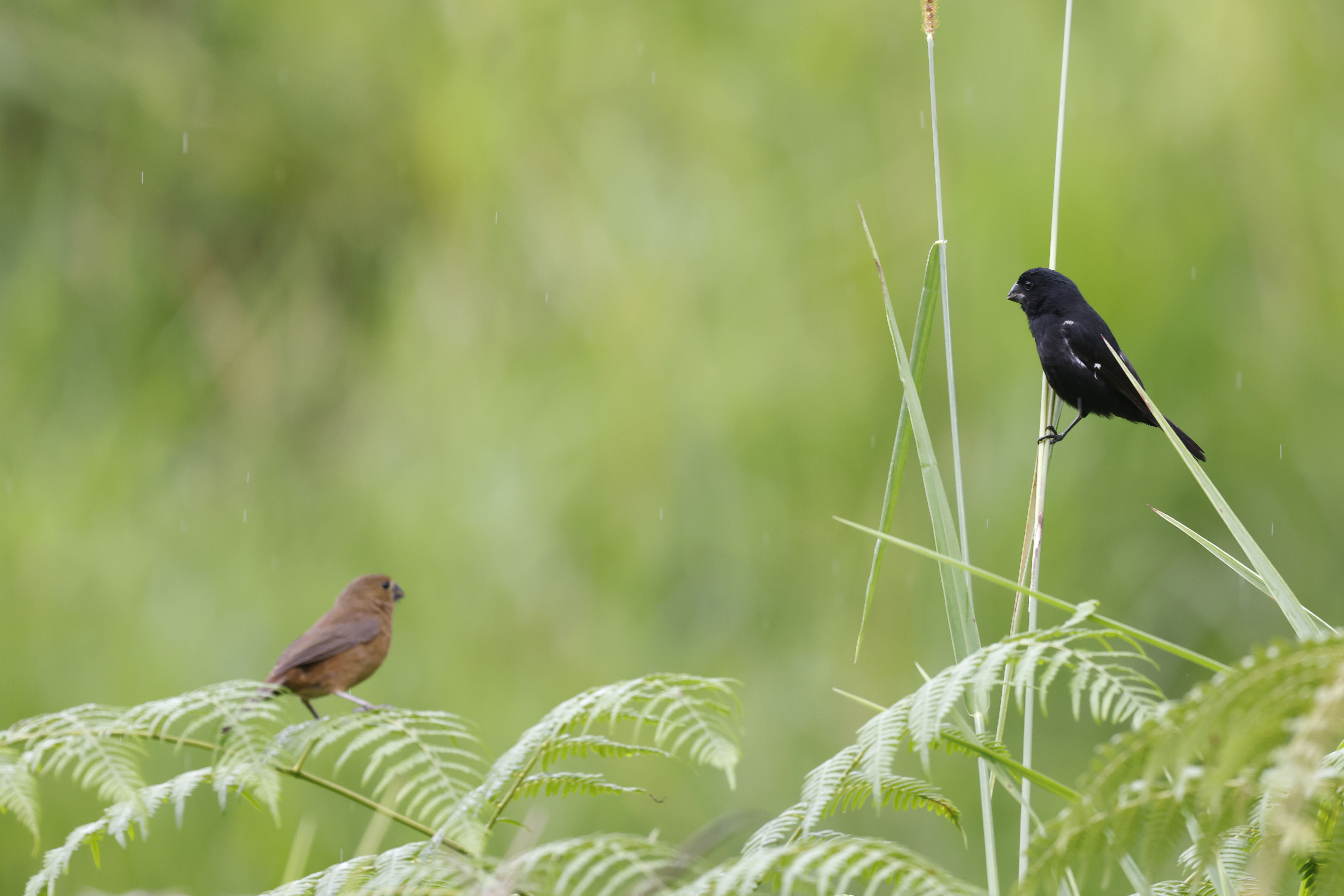
Diego then took us into one of the pastures, where we had frustratingly brief views of White-throated Crake as it ran across open areas of grass below us. In the end we managed acceptable views, but did not get good photos. We just finished up as the rain and cloud set in, but as drove back down towards the highway it began to clear once more. A sighting of two Thick-billed Seed-Finch on the side of the road got us to stop, and here we had a lively mixed species flock containing a Loja Tyrannulet, another of the species we wanted needed to try and find here.

And that wrapped up our second day, just after lunchtime. After a bite to eat we drove the three hours to our next stop, the town of Celica, an altered destination since we could not ascend the mountain to Cerro dos Arcos due to the state of the road. 

-Reserva Buenaventura; Jardim dos Colibris
-El Oro Tapaculo
-El Oro Parakeet
-White-throated Crake
-Violet-tailed Sylph
-White-booted Racket-tail
-White-vented Plumeleteer
-White-necked Jacobin
-Green Thorntail
-Gartered Trogon
-Ruddy Pigeon
-Rufous-headed Chachalaca
-Loja Tyrannulet
-Thick-billed Seed Finch
-Scale-crested Pygmy Tyrant

Species List:
Reserva Buenaventura: Rufous-headed Chachalaca, Plumbeous Pigeon, Ruddy Pigeon, Pauraque, White-necked Jacobin, Brown Violetear, Green Thorntail, Violet-tailed Sylph, Brown Inca, Velvet-purple Coronet, White-booted Racket-tail, Fawn-breasted Brilliant, Green-crowned Brilliant, White-vented Plumeleteer, Rufous-tailed Hummingbird, Andean Emerald, White-throated Crake, Black Vulture, Swallow-tailed Kite, Savanna Hawk, Roadside Hawk, Yellow-throated Toucan, Crested Caracara, Bronze-winged Parrot, El Oro Parakeet, Red-masked Parakeet, El Oro Tapaculo, Wedge-billed Woodcreeper, Line-cheeked Spinetail, Azara's Spinetail, Scale-crested Pygmy Tyrant, Ornate Flycatcher, Loja Tyrannulet, Tropical Kingbird, Brown-capped Vireo, Blue-and-white Swallow, Orange-crowned Euphonia, Common Bush Tanager, Rufous-collared Sparrow, Shiny Cowbird, Olive-crowned Yellowthroat, Slate-throated Whitestart, Lemon-rumped Tanager, Fawn-breasted Tanager, Palm Tanager, Blue-necked Tanager, Bay-headed Tanager, Golden Tanager, Silver-throated Tanager, Swallow Tanager, Green Honeycreeper, Thick-billed Seed Finch, Variable Seedeater, Black-and-white Seedeater, Yellow-bellied Seedeater, Bananaquit, Buff-throated Saltator, Black-winged Saltator, 

Thursday, 6 April 2023

Ecuador; Day 2 - Reserva Buenaventura

 Today was our first full day in Ecuador, and our first location was the Jocotoco reserve at Buenaventura, an area of cloud forest on the western side of the Andes. The reserve was easy to access, but the weather had solidly turned against us, with heavy rain all morning, followed by dull overcast conditions during the middle of the day, followed by more rain and then thick fog at the end of the afternoon.

Consequently, we spent the first part of the morning in the shelter of the lodge, observing the hummingbird feeders at close quarters. The highlights were Green-fronted Brilliant, Green Thorntail and the ever-lively White-necked Jacobin. Although the light was dull, it was still enough to appreciate the stunning colours on these wonderful birds. There were a few other birds hanging around the lodge area as well, including Rufous-headed Chacalaca and an afternoon flyby of Grey-backed Hawk, a key target species for this area.

However, the species the reserve is most famous for is the Long-wattled Umbrellabird, after which their lodge is named. We were very lucky in that the member of lodge staff on-site came with us to the lek area, and was able to find us a spectacular Umbrellabird sitting low in the canopy. It was not active and without him, we would have easily overlooked it, but in the end we had phenomenal views. Sadly when we returned in the afternoon to hopefully see the lek, we saw and heard nothing.

Whilst out in the forest we did encounter some of the other species we were hoping for. Ochre-breasted Tanager is a species of interest in the reserve, as is the Brownish Twistwing, and we found both of these reasonably easily. There were a few lively mixed species flocks as well, although nothing rare was within them, it was nice to see Sulphur-rumped Flycatcher and Checker-throated Stiplethroat.

Perhaps the highlight of the day, aside from the Umbrellabird, was the stunning Anthony's Poison Arrow Frog, a species endemic to the region. Although the first individuals were pointed out to us, we soon picked out many by ourselves, jumping through the vegetation at the side of the road. Their stripes were terrific, but once they entered the water and started swimming, the red on the inside of their legs was suddenly the most eye-catching feature.

For sure a brilliant start to our trip, with some excellent species and targets already got to grips with. With luck, the rest of our itinerary will pass with a similar success rate. 

-Reserva Buenaventura
-Long-wattled Umbrellabird
-Violet-bellied Hummingbird
-Brown Violetear
-Green Thorntail
-Green-crowned Brilliant
-Western Woodhaunter
-Grey-backed Hawk
-Brownish Twistwing
-Rufous-headed Chachalaca
-Anthony's Poison Arrow Frog
-Mountain Coati

Species List:
Reserva Buenaventura: Rufous-headed Chachalaca, White-tipped Dove, White-necked Jacobin, White-whiskered Hermit, Brown Violetear, Green Thorntail, Green-crowned Brilliant, Crowned Woodnymph, Rufous-tailed Hummingbird, Andean Emerald, Violet-bellied Hummingbird, Black Vulture, Turkey Vulture, Swallow-tailed Kite, Plumbeous Kite, Roadside Hawk, Grey-backed Hawk, Pale-mandibled Aracari, Yellow-throated Toucan, Olivaceous Piculet, Bronze-winged Parrot, Red-masked Parakeet, Checker-throated Stipplethroat, Slaty Antwren, Zeledon's Antbird, Spotted Woodcreeper, Streaked Xenops, Western Woodhaunter, White-bearded Manakin, Long-wattled Umbrellabird, Northern Schiffornis, Sulphur-rumped Myiobius, White-throated Spadebill, Olive-striped Flycatcher, Scale-crested Pygmy Tyrant, Brownish Twistwing, Tropical Kingbird, Tawny-faced Gnatwren, Bay Wren, Orange-bellied Euphonia, Yellow-bellied Siskin, Yellow-throated Bush Tanager, Orange-billed Sparrow, Tropical Parula, Buff-rumped Warbler, Ochre-breasted Tanager, Lemon-rumped Tanager, Palm Tanager, Bay-headed Tanager, Green Honeycreeper, Saffron Finch, Bananaquit, Buff-throated Saltator, 

Wednesday, 5 April 2023

Ecuador; Day 1 - Arrival

  So begins our next journey together, returning to Ecuador to complete the itinerary that was rudely interrupted last year when all our equipment was stolen. I arrived via Guayaquil at around 10:00 but had to wait a few hours for Lia to follow. Once she arrived at 14:00 we were able to get things moving, so we collected the car, some snacks and set off south to our first reserve, the Jocotoco Reserve of Buenaventura.

  Although we had no real plans for birding today, due to logistics, there were many floodplains as we were leaving the city of Guayaquil, and here we saw many species of commoner waterbirds, such as Egrets and Herons. It was also surprising to find many large green Iguanas lounging around on the side of the road. Not something I expected to see in one of Latin America's biggest cities. 

Species List:
Guayaquil: Feral Pigeon, Smooth-billed Ani, Wattled Jacana, Magnificent Frigatebird, Great Egret, Snowy Egret, Western Cattle Egret, Striated Heron, Roseate Spoonbill, Snail Kite, Savanna Hawk, Ringed Kingfisher, Saffron Finch,

Sunday, 26 March 2023

Mixenden Reservoir twitching Whooper Swan

 Today was Whooper Swan day in Calderdale, and across the entire north of England it seemed. I had already done a round on Soil Hill mid-morning and found nothing of particular note, with no apparent migration on display. Having just returned to the house, I got ACs message about a flock of Whoopers coming north from Shibden. From the bedroom window I managed to pick them up, before jumping in the car, without my phone, and racing up to Ned Hill Track to try and intercept them.

Once at Ned Hill Track I failed to locate the birds, and after a 10-minute scan I assumed they had gone up the other side of the hill and returned home. No sooner had I arrived home than the phone went off again. Once again it was AC reporting another flock of Whoopers coming north. Once again I picked them up from the window, before racing down to the car and back up to the Ned Hill Track. Once again they failed to arrive, but a follow-up message from AC suggested they may have landed on Mixenden. I had a quick look down, and yep, there did indeed appear to be some swans, although hugging the near shore and so primarily out of sight.

Once at the reservoir it was clear why I hadn’t picked up any swans from Ned Hill Track, as both flocks had clearly dropped off here. In total I counted 111 in the field, but checking photos it does appear to be 112. After a short while watching them I returned to the car, ready for setting off back, when another message from AC came through, warning of a third flock. Expecting them to drop in, I headed back to the reservoir, only to see them through the houses, passing the hill on the other side. Fortunately, this latest flock then looped back round, past Soil Hill before dropping down onto Ogden. An excellent Whooper Swan day 2023!

And there was another nice bonus on Mixenden Reservoir, with a smart drake Common Scoter. It kept mostly to the far end, nearly always facing away in strong wind, but certainly an unexpected addition to the visit. And then, just as I was wrapping up, a Red Kite drifted over heading south. A brilliant day birding in Halifax! 

-Whooper Swans
-Common Scoter
-Red Kite

Species List:
Mixenden Reservoir: Greylag Goose, Canada Goose, Whooper Swan, Mallard, Common Scoter, Common Wood Pigeon, Black-headed Gull, Common Gull, European Herring Gull, Lesser Black-backed Gull, Red Kite, Eurasian Magpie, Western Jackdaw, Carrion Crow, Eurasian Blue Tit, Great Tit, Common Chiffchaff, Eurasian Wren, Common Starling, Common Blackbird, European Robin, Dunnock, House Sparrow, Common Chaffinch, European Goldfinch, 

Sunday, 19 March 2023

Fly Flatts twitching Pale-bellied Brent Goose

  I had just reached the bottom of the North Slope on my walk around Soil Hill in the morning when the message came through that Brian Sumner had found three Brent Geese on Fly Flatts. Having never seen one in West Yorkshire, and being only the second ever for Halifax, I cut short my walk and made tracks back home to collect the car.

  On the drive over Andy Cockcroft messaged through that the birds were still present and were Pale-bellied, the subspecies which I have seen least of. Fortunately, we arrived not long after, to find the birds still present. They were on the far side of the reservoir from the road, grazing on the bank. After a short while they entered the water and started swimming around, before returning to the bank for some more grazing and a nap.

  Was good to see a few local birders present, also twitching the geese. There was not a great deal else around on the reservoirs but was good to have my first visit up to the moors with singing Skylark and Curlew both abundant, similar to Soil Hill.

  Great birds to see in Halifax, and a cracking find by BS.

-Pale-bellied Brent Goose

Species List:
Fly Flatts: Greylag Goose, Pale-bellied Brent Goose, Canada Goose, Mallard, Eurasian Oystercatcher, Northern Lapwing, Eurasian Curlew, Lesser Black-backed Gull, Common Buzzard, Common Kestrel, Eurasian Skylark, Pied Wagtail, Meadow Pipit,