Showing posts with label Insect-Bee Fly. Show all posts

Friday, 26 June 2020

Soil Hill; Isolation week 13

Soil Hill has been slightly livelier this week than the last few weeks, cooler conditions followed by baking hot conditions with a dash of rain have helped boost the average species list for a daily visit to above forty on a number of occasions. Highlights are still thin on the ground but there were a few standouts from the week.
On the 20th a Chiffchaff could be heard singing from Ogden plantation. While not actually on the Hill it could be heard from the Ned Hill Track and so it my second site recording of the year. On the same date I recorded the first Siskins of the week. However they featured more towards the end of the week, when I recorded singles on both the 25th and 26th followed 05.30 starts to try and cash in on the insane finch migration happening on the East Coast. Sadly, these two Siskins were all I have to show for my effort. On the subject of finches, a Lesser Redpoll flew over Taylor Lane during the morning of the 22nd calling loudly and giving the full call. I had suspected a Redpoll was lingering around Soil Hill after hearing a bird twice, but only ever seeing it flying over at altitude. This time the bird was much lower in height and was giving a full rendition of its flight call. Also on the finch front, a single Bullfinch was at the bottom of the north slope, also on the 22nd with a pair present in the same location the following day. On the 23rd a new Blackcap took up territory half way down the North Slope Treeline, but sadly it had moved on by the 26th. At least four of the six Stonechat fledglings were still going strong, feeding together at the bottom of the North Slope on the 25th and 26th. And finally a Common Buzzard flew over on the 22nd.
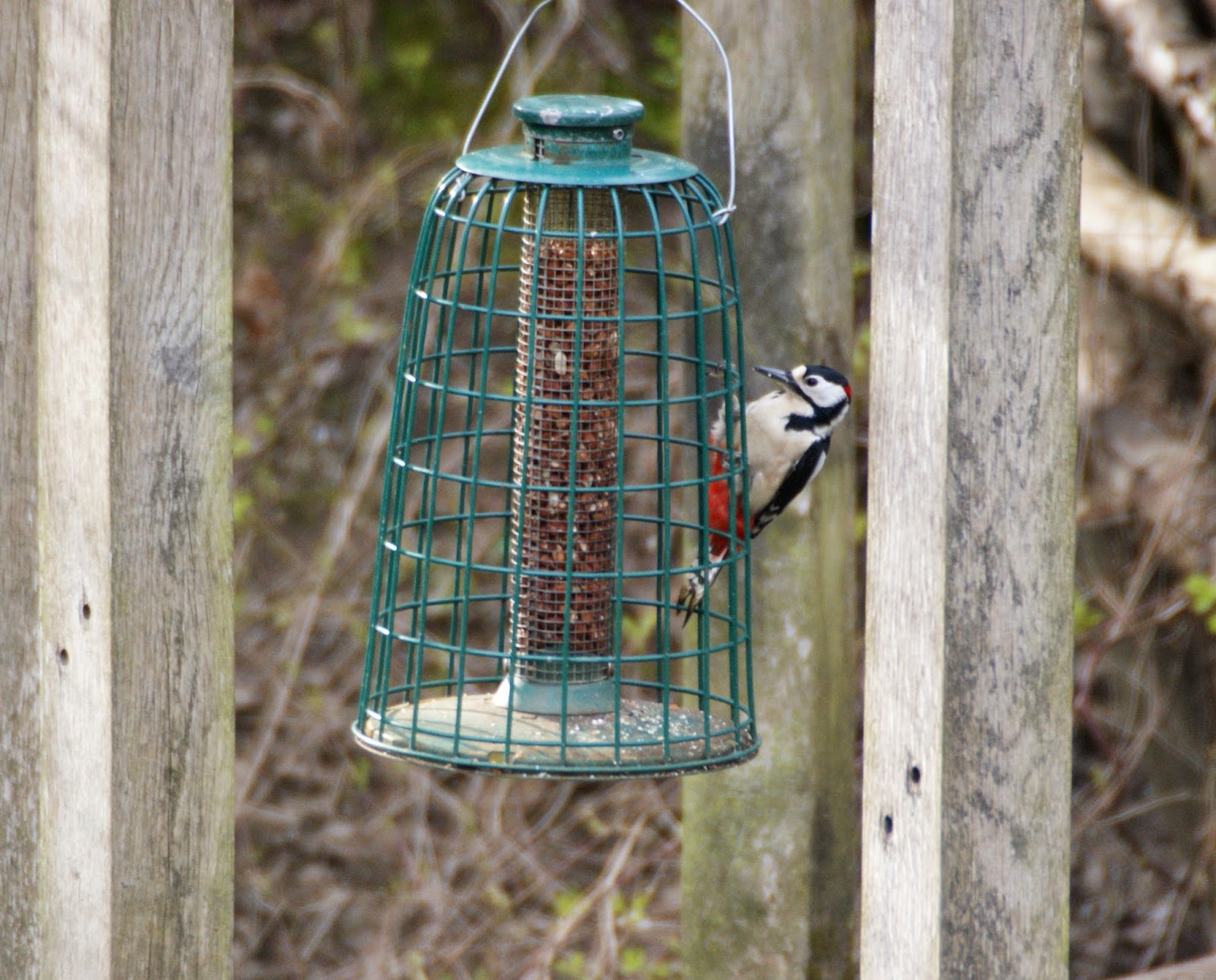
The standout bird of the week was a cracking juvenile Great-spotted Woodpecker that came bombing over the North Slope on the 25th. I managed to grab some flight shots, the first time I have seen on actually in Soil Hill airspace and the second time I have seen one from the site. Then, on the 26th I found presumably the same bird in the North Slope Tree Line, calling loudly but occasionally showing. This brings my Soil Hill yearlist up to 92.
There was also a female Emperor Dragonfly during the week, my third Dragonfly species on site this year.
On the 21st I headed out to Withens Clough Reservoir following a reported Red-necked Phalarope. Alas the bird could not be found, with suspicions the report may have involved a juvenile Black-headed Gull, which I also did not see. A few Stonechat and Little Ringed Plover were the best birds of the afternoon. On the way back I called off at Fly Flatts where there was two pairs of Tufted Ducks and a Ringed Plover to enjoy. And on the 26th I visited Whiteholme Reservoir following a scattering of wader reports from inland sites. The best I could manage in this unseasonable time was a pair of Dunlin and a Ringed Plover. But it was very pleasant birding all the same. 
-Great-spotted Woodpecker
-Emperor Dragonfly
-Volucella bombylans

Species List:
Soil Hill: Canada Goose, Mallard, Red-legged Partridge, Common Pheasant, Feral Pigeon, Stock Dove, Common Wood Pigeon, Eurasian Collared Dove, Common Swift, Common Moorhen, Eurasian Oystercatcher, Northern Lapwing, Eurasian Curlew, Common Snipe, Black-headed Gull, European Herring Gull, Lesser Black-backed Gull, Grey Heron, Common Buzzard, Little Owl, Long-eared Owl, Great Spotted Woodpecker, Common Kestrel, Eurasian Magpie, Western Jackdaw, Rook, Carrion Crow, Coal Tit, Eurasian Blue Tit, Eurasian Skylark, Sedge Warbler, Sand Martin, Barn Swallow, Willow Warbler, Common Chiffchaff, Eurasian Blackcap, Common Whitethroat, Goldcrest, Eurasian Wren, Common Starling, Mistle Thrush, Song Thrush, Common Blackbird, European Robin, European Stonechat, Dunnock, House Sparrow, Pied Wagtail, Meadow Pipit, Common Chaffinch, Eurasian Bullfinch, European Greenfinch, Common Linnet, Lesser Redpoll, European Goldfinch, Eurasian Siskin, Common Reed Bunting, European Rabbit, European Red Fox, Western Roe Deer, Emperor Dragonfly, Azure Damselfly, Large Red Damselfly, Small Tortoiseshell, Red Admiral, Meadow Brown, Small Heath, Common Blue,
Fly Flatts: Canada Goose, Mallard, Tufted Duck, Eurasian Oystercatcher, Northern Lapwing, Common Ringed Plover, Eurasian Curlew, Common Sandpiper, Common Redshank, Lesser Black-backed Gull, Common Kestrel, Meadow Pipit, Common Reed Bunting,
Whiteholme Reservoir: Canada Goose, Mallard, Common Swift, European Golden Plover, Common Ringed Plover, Little Ringed Plover, Eurasian Curlew, Dunlin, Common Sandpiper, Common Redshank, Black-headed Gull, Lesser Black-backed Gull, Carrion Crow, Eurasian Skylark, Northern Wheatear, Pied Wagtail, Meadow Pipit, Common Reed Bunting, Black-tailed Skimmer, Emperor Dragonfly, Small Heath, Meadow Brown, Small White, Large Skipper, 
Withens Clough Reservoir: Greylag Goose, Canada Goose, Mallard, Common Swift, Little Ringed Plover, Common Sandpiper, Lesser Black-backed Gull, Western Jackdaw, Carrion Crow, Barn Swallow, Willow Warbler, Eurasian Blackcap, Eurasian Wren, Common Starling, Mistle Thrush, European Stonechat, White Wagtail, Meadow Pipit, Common Chaffinch, Common Linnet, European Goldfinch, Common Reed Bunting,

Thursday, 2 April 2015

Cambridge Holiday day 5: Himalayan Wildlife Watching and going home

Last day of the holiday, so we headed to a National Trust property, Angelsey Abbey, same as last time we were down this way. I did not expect to see much but it turned out to be the best wildlife filled day of the holiday. Probably as a consequence of the weather, which was the nicest it had been so far on the holiday. As last time, as soon as we arrived I headed straight to the wildlife area in the hope that there may be something good on the feeders or in the woods. However, I thought we had arrived too late, and that most things would have been scared off by rowdy kids.
As I was crossing the lawns I spotted a Green Woodpecker. Its crazy to think I have seen more of these birds in the past 3 days that I did in the whole of last year but now I managed to get a photo of one too as it perched up in a tree in a reasonably photograph-able position.
-Green Woodpecker
I got to the hide but there was not much there. A lovely moorhen sitting on a nest in front of the hide was a highlight, and when we returned in the evening I could see 2 eggs under there too, so that was nice. There were also some smashing views of Blue Tit and Chaffinch as well as a couple of Long-Tailed Tits coming through. As a results I stayed about half an hour before leaving.
Now I was at a loss as to where to look for stuff, so I headed around the house, to the second hand bookshop, and then off into the gardens along the river. The river was dead, with no vegetation on it at all. However, there was a Grey Wagtail on it, though that was the sum total of all the bird species. 
As I entered the garden though I spotted a Brimstone butterfly flying along the borders. This was quite exciting, my first of the year and a species I do not see as much as I would like. In the end I found up to 8 of these butterflies around the borders. I was lucky enough to find one that had landed in an ideal position so could grab a few record shots for the year.
-Brimstone
It was then that I got a text saying to be back for lunch. Of course it was at this point that all the wildlife appeared. I was walking down a wooded alley with conifers on both sides, and importantly no people, when I spotted a female pheasant crossing the path in front of me. At once I could see that this was not an ordinary pheasant with striking plumage and a black eye mask on an orange face. I realised pretty quickly that I must be looking at a female Reeves Pheasant, though I knew nothing about them, the mask on this bird matched the males very nicely. I proceeded to follow the bird round for about 20 - 30 mins before deciding it best to go to lunch. I also found it after lunch, though it was much harder to refind after lunch, and managed to get some reasonable shots, though it being under the trees the light was poor. However, I got enough shots to show the spangly plumage and striking head pattern. Sadly, this was my favourite of the pheasant encounters of the holiday but its the one I can't tick!
-Reeves Pheasant
As I was following the pheasant before lunch I also spotted a Muntjac Deer in deep bushes. I tried for a photo but it was too thick in, and when it bolted it was on the far side to me, so my only effort was blurry and not particularly clear. Having said that, it does show the difficult nature of seeing these animals.
-Muntjac Deer
I also spotted a Common Buzzard overhead at this point as the thermals were picking up. I decided to leave it and go for lunch, but returned after lunch. After lunch I failed to pick up the pheasant for a couple of hours and there was no sign of the deer. There were other bits and pieces though, including a pair of Goldcrests, a couple of other butterfly species; Comma and Peacock and got smashing views of Sparrowhawk and Treecreeper.
As the afternoon drew on my parents and I decided to re-try the wildlife area to see what was there. Just as we approached my dad spotted 2 Muntjac Deer deep in the undergrowth, and I tried again for a photo. However, once more I failed pretty badly. We also had outstanding views of up to 4 Jays together!
-Muntjac Deer
It was late afternoon at this point so I did not see much more. On the feeders we were joined by a Great Spotted Woodpecker, though it was on the more distant feeders. That was about it though, and after that we left to head off home. It had been a fantastic day, and to finish with here are a few photos of other wildlife seen through the day, showing just how fantastic a days birding it had been...
-Bee Fly
-Sparrowhawk
-Comma
-Great Spotted Woodpecker
Species List:
Angelsey Abbey NT: Green Woodpecker, Jay, Great Spotted Woodpecker, Rook, Jackdaw, Blue Tit, Coal Tit, Great Tit, Robin, Common Pheasant, Moorhen, Mallard, Woodpigeon, Chaffinch, Long-Tailed Tit, Common Buzzard, Grey Wagtail, Magpie, Treecreeper, Black-Headed Gull, Sparrowhawk, Song Thrush, Mistle Thrush, Goldcrest, Greenfinch, Reeves Pheasant, Muntjac Deer, Rabbit, Grey Squirrel, Comma, Peacock Butterfly, Brimstone

Tuesday, 17 August 2010

castle howard arboretum-last wednesday

So, here we go. Posting that I should have completed last Wednesday but am here, a complete week later, filling in the gaps. Never mind, however. Last Wednesday was a broken cloudy warm but windy type of day, so the weather was decent enough. The place we were going to was an arboretum (a tree museum) but luckily it had some lakes, although the foreign trees and vast expanses of lawn probably meant that there was not going to be much going in the way of birdlife. I decided to go straight to the lakes, as they were quite close to the entrance. I managed to spot 2 darter type dragonflys as the buzzed away from me but I was unable to pin any identification. The first dragonfly I got a really good look at was a female common darter which I found on the shore of the second lake which was adjacent to the first. It was quite docile and so I was able to take a great deal of photos.
 
I also, at this point, spotted a very large buzzard flying over the place but I was too slow to get any pictures which is a shame really because it was flying so low, I'm sure that they would have come out great. Anyway, around the edge of the second lake I managed to find a budlia plant which is always popular with butterflys. There were plenty of vaneselids there but the most exciting for me was when a group of about 5 large whites flew in. You can really tell what they were and not just any white because they were so big, enormous. It is a species that I really did need a record shot off (although now having confirmed a sighting, I doubt that any of my previous records were genuine)
 
I also managed to track down some more rufous grasshoppers in the long grass, which is actually the only grasshopper that I can identify.
 
There was a small pond that was situated before the main lake and so I decided to go and have a look there to see if there were any darters to try and take photos of. There were two male common darters flying about but, sadly they were a little hard to photograph because they didn't stay still.
I got chatting to some people who said that they had just possibly seen their first dark-green fritilary feeding on some of the marsh plants. I didn't catch up with it but they also said that there were a lot of dragonflys sheltering behind some long grass so I headed off there. There were indeed a great deal of common darters resting in the long grass and a check of similar habitats around the lake-shore provided similar results. I wont explain all these photos individually but they are all common darters and they were taken near some long grass.
Eventually I decided to look elsewhere for more dragonflys. I soon learnt that the dragonflys also liked to roost by the recently cut, dried, brown grass by the very edge of the lake and so managed to take even more great shots.
However the dragonflys by the lakeside were slightly more nervous that the ones in the long grass so I decided to return to the long grass and that is where the next series of photographs were taken!
But it was not just dragonflys that were roosting down by the lakeside grass as there many peacocks, red admirals and even a few speckled woods. I also managed to find a pair of common blue damseflys.
There was a third pond listed on the information map, although it was only small so I decided to head off over that way before lunch to have a look. just as I reached last clump of foreign trees before it a hawker dragonfly flew out of nowhere. This hawker however had brown wings and so I automatically new that it was a brown hawker, my first, and was worth chasing. I followed it everywhere Until I lost it, it still not having settled. I made my way to the pond, just round the corner, to find two of them plus a common hawker. I tried my hardest to get some record shots but I eventually lost them.
There was, however, plenty more to keep interest alive for example this large bee-fly that was feeding on a thistle.
and on the path there were lots of ruddy darters which were my first this year...
On my way back from the pong, towards lunch,I managed to find the first notable bird of the day. This juvenile green woodpecker which is actually the first I have seen since I got this new camera! So these below are record shots (as you can probably tell)
After lunch I went back to the darter place where the darters live and was not disappointed by yet more, common darters.
However a new butterfly had roosted on the cut grass, a painted lady which is my first of the season and (shamefully given the numbers last year) my record shot!
By the time we were ready to go home the darters had started roosting gin the trees, at eye level, allowing me to get some even better photos! what a finish to the day!