Showing posts with label Whinchat. Show all posts

Sunday, 4 September 2022

Soil Hill Birding; updates from the week 29th August - 4th September

  The warm August gave way to a much wetter September, with the final arrival of rainy conditions and strong east wings. Nevertheless, the daily visits to the Hill continued unabated and still birds were being produced. We did also spend some time away visiting other areas, mainly for tourism but also visiting friends, and this meant a few of our visits were in the afternoon or early evening, obviously changing the dynamic of the birding.

  • The bird of the week appeared during a late afternoon visit on the 3rd, when a child riding an ATV on Ned Hill Track flushed out a roosting Tawny Owl. Fortunately, once the rider had moved on, the bird settled and we were able to get some amazing views. It understandably remained alert throughout our time watching, in stark contrast to the only previous time I have seen this species here, when the individual never opened its eyes. 
  • The only true Mega of the week, or at least it was before this August, was on the 29th when three Yellow Wagtails flew over Perseverance Road together. I fudged my camera settings but Lia was able to get a brilliant recording of the birds as they flew off heading east. We checked the horse paddocks along the road, but didn’t find them anywhere. 

  The change in conditions has not slowed down the stream of migrants passing through Soil Hill this autumn. As the season draws on the composition of migrants begins to gradually change, and that has already begun to take place this week.

  • The most abundant of the notable migrants this week was absolutely Whinchat, with sightings on almost every single day. Generally the birds were found at the bottom of the North Slope where they remained distant, but on the 04th there were also two at the top on the walls near the masts. The highest count of the week was 3 on the 30th. It remains difficult to judge the total number of birds this autumn, but from our observations I suspect that there have been a minimum of five new birds this week, meaning an absolute minimum of 13 Whinchat so far this autumn. 

  • The only Spotted Flycatcher of the week was actively feeding on Ned Hill Track at the end of the afternoon on the 02nd. It showed well at times in lovely evening light.  

  • The change in conditions had a dramatic effect of Tree Pipit observations this week, with just a single bird on the 29th. Notably, this bird was not a flyover but was instead seen feeding on the short grass above the Ned Hill Track, quite the behavioral difference from the usual migrating individuals.   

  • The local warbler squad remained on and off throughout the week, with Sedge Warbler still being seen until the 01st, while Grasshopper Warbler was only seen on the 31st. Blackcap was also seen on just one date, when an individual was seen at the bottom of the North Slope on the 04th

  • Willow Warblers completely dropped off a cliff this week, with no counts higher than four birds, and with my first blank dates since the spring.  In fact, three on the 30th was the only date where more than one individual was seen. Conversely, Chiffchaff passage continued unabated, with multiple individuals recorded on every day this week peaking with four on the 03rd

  • A warbler I have generally left out of these summaries is Common Whitethroat, but numbers have already begun to drop as the autumn draws on and it has been most noticeable this week. With between four and six individuals were recorded until the 02nd, after which only a couple of birds were noted. 

  The general birding also continued to provide some goodies, with the Grey Partridge putting in an appearance again with a single on the 30th and the group of three seen again on the 01st. A distant Collared Dove was seen flying north on the 31st, which is the first I’ve recorded here since May. A rather dozy juvenile Common Buzzard has been around most of the week, perching on various posts at the bottom of the North Slope, where it takes the heat from the local corvids. And on the 01st, a Great Spotted Woodpecker was seen flying south from the Koi Farm Copse.

  A distant Curlew was heard calling on the 29th, but the individual eluded us. A small group of Lapwings has reappeared on the Bottom Cattle Fields, seen on and off throughout the week with a maximum count of 19 on the 03rd. These bird have presumably started using the field again in , response to the wetter weather. Another species that will benefit from the fields becoming wet again are the Common Snipes, which also started to reappear more consistently this week with birds being seen on three dates this week. Sadly there was no repeat of the impressive snipe arrival seen last September, but as the fields become wet again hopefully the birds will return in good numbers. 

-Tawny Owl
-Spotted Flycatcher
-Tree Pipit
-Whinchat

Species List:
Soil Hill: Canada Goose, Mallard, Grey Partridge, Common Pheasant, Red-legged Partridge, Eurasian Collared Dove, Feral Pigeon, Stock Dove, Common Wood Pigeon, Common Moorhen, Northern Lapwing, Eurasian Curlew, Common Snipe, Black-headed Gull, Common Gull, European Herring Gull, Lesser Black-backed Gull, Great Cormorant, Eurasian Sparrowhawk, Common Buzzard, Little Owl, Tawny Owl, Great Spotted Woodpecker, Common Kestrel, Eurasian Magpie, Western Jackdaw, Rook, Carrion Crow, Coal Tit, Eurasian Blue Tit, Great Tit, Eurasian Skylark, Sedge Warbler, Common Grasshopper Warbler, Barn Swallow, Willow Warbler, Common Chiffchaff, Eurasian Blackcap, Common Whitethroat, Goldcrest, Eurasian Wren, Common Starling, Mistle Thrush, Common Blackbird, Spotted Flycatcher, European Robin, Whinchat, Northern Wheatear, Dunnock, Grey Wagtail, Pied Wagtail, Western Yellow Wagtail, Meadow Pipit, Tree Pipit, House Sparrow, Common Chaffinch, Common Linnet, European Goldfinch, Common Reed Bunting,

Saturday, 27 August 2022

Soil Hill birding; updates from the week 22nd - 26th August

This is the last full week in August for this year, and what an August it has been with an incredible 75 species recorded, an absolutely unbelievable month for inland birding generally, let alone Soil Hill. This week the good birds continued with a steady trickle of commoner migrants and a few other goodies sprinkled in for good measure. When the birding is like this it makes you excited to get out in the morning to see what you can find. 

  • The bird (s) of the week were undoubtedly Yellow Wagtails. Remarkably, over the course of the week we recorded this species on four occasions, three in the same morning in what seems to be a remarkable run for the species at this site where I have only recorded it once previously.

    -The first of the week was on the morning of the 23rd when we were at the bottom of the North Slope.  Fortunately, I was quickly able to pick up the bird and had some time to set up my camera to make sure I got a few photos. The bird was a little distant, and in the fog and panic I managed only a couple of blurred record shots, but since I failed to get anything when I last saw the species here, I am pleased I got something. The bird didn’t stop and continued west towards Ogden.

    -The next three records were all on the 26th, with an individual flying over Taylor Lane at 06:44, and two flying over the bottom of the North Slope at 07:26 and then finally at 08:29. This corresponded with a trickle of other species, all of which were flying South-West. Sadly I only managed a few photos of the first bird, especially since the second bird flew really low over us.

Compared to the previous weeks, totals of migrants dropped off somewhat this week but there was still plenty to look at, including a long overdue addition to the year-list here. 

  • On the 25th the first Common Redstart of the year finally appeared on the Ned Hill Track, picked out excellently by Lia. This bird is the first time I have ever found a male here, and the lack of covert hooks suggests it may even be an adult. It was elusive and mobile so photos were at a premium. In the evening JJL found a redstart in the fields near Bradshaw which we went to look at, and superficially appears to be the same bird, showing how these migrants move through once they arrive.
  • During the week we only recorded Whinchat on three dates, but that did include two together on the 24th, the others being singles on the 25th and 26th. All of these birds have been in the same area at the bottom of the North Slope, which makes judging the total number difficult. However, by my reckoning, there have now been seven different individual Whinchat pass through so far this autumn. 

  • There was a light scattering of Wheatear during the week, with observations on three dates; three on the 22nd, two on the 24th and a single on the 26th.   

  • The only Spotted Flycatcher of the week appeared in the garden of Rabbit Dell during the afternoon of the 22nd, as we drove back over the Hill on our return from the supermarket. The bird did not appear present in the morning, so could have been brought down by the arrival of rainfall around lunchtime. It then stayed in the area until the 24th.  
  • Despite the many rarities so far this August, the month really belongs to Tree Pipit. This week was no exception with birds recorded every single day. Almost all of these were birds on vis-mig, with the highest counts being four on the 23rd, five on the 24th (within an hours period), and an incredible 11 on the 25th; where nine flew south and two were grounded on the summit, the first grounded individuals this year.   
  • The contingent of warblers remained present for this week, with Sedge Warblers making an appearance on the 23rd and then two on the 24th, again both juveniles. The juvenile Grasshopper Warbler was still present on three dates this week, and was even reeling, or attempting to, on the 23rd. And a male and female/immature Blackcap have also been seen on and off at the bottom of the North Slope. 

  • There were still a few Willow Warbler passing during the week, with 10 on the 22nd and 11 on the 23rd, before numbers dropped to just single figures. Chiffchaff is now being seen almost daily, with three on the 25th being the highest count. This count included the first singing bird of the autumn.  

  • The final few Common Swifts continued to pass through this week. A single was seen on the 22nd, followed by a late group of six on the 26th. Also on the 26th there was a flock of nine House Martin that slowly flew south, the only sightings of the week. 

  • Although it is not yet the time for true migrants, Goldcrest has already begun to appear more regularly, especially along Taylor Lane where at least one individual has been seen daily, and three seen together on the 23rd. As the autumn draws on we can look forward to more of these beauties.    

On the none migrant front there continued to be a steady trickle of other interesting birds. The most notable of which is the first Green Woodpecker of the year which was on Taylor Lane on the 23rd. Two Great Spotted Woodpecker were also seen flying south distantly on the 26th, but this is a more regularly encountered species at this time of year.

The full contingent of 10 Grey Partridge was seen again on the 23rd, although in two smaller groups of seven and three. There was one Curlew during the week, with a single on the 26th which was calling further up the valley. Common Snipe was also recorded on the just the 26th, but this was three individuals dropping in to the bottom  Cattle Fields, as hopefully numbers build up into the autumn.

And finally, we recorded our second highest total of Mistle Thrush of the year on the 22nd when 24 flew over Taylor Lane. 

-Yellow Wagtail 23.08.2022
-Yellow Wagtail 26.08.2022
-Sedge Warbler
-Goldcrest
-Spotted Flycatcher
-Whinchats
-Tree Pipits
-Common Redstart


Species List:
Soil Hill: Canada Goose, Mallard, Grey Partridge, Common Pheasant, Red-legged Partridge, Feral Pigeon, Stock Dove, Common Wood Pigeon, Common Swift, Common Moorhen, Northern Lapwing, Eurasian Curlew, Common Snipe, Black-headed Gull, Common Gull, European Herring Gull, Lesser Black-backed Gull, Great Cormorant, Eurasian Sparrowhawk, Common Buzzard, Western Barn Owl, Little Owl, Great Spotted Woodpecker, European Green Woodpecker, Common Kestrel, Eurasian Magpie, Western Jackdaw, Rook, Carrion Crow, Coal Tit, Eurasian Blue Tit, Great Tit, Eurasian Skylark, Sedge Warbler, Common Grasshopper Warbler, Barn Swallow, Common House Martin, Willow Warbler, Common Chiffchaff, Eurasian Blackcap, Common Whitethroat, Goldcrest, Eurasian Wren, Common Starling, Mistle Thrush, Common Blackbird, Spotted Flycatcher, European Robin, Common Redstart, Whinchat, Northern Wheatear, Dunnock, House Sparrow, Grey Wagtail, Western Yellow Wagtail, Pied Wagtail, Meadow Pipit, Tree Pipit, Common Chaffinch, Eurasian Bullfinch, Common Linnet, European Goldfinch, Common Reed Bunting, 

Sunday, 21 August 2022

Soil Hill birding; updates from the week 15th - 21st August

  At the close of this week we have managed to see no less than 72 different species on Soil Hill during August. To make that fact even more bonkers is that 66 of those have been seen in just the last week with some excellent local species turning up with ample common migrants. Once the heatwave had moved on the birding became more vulnerable to windy conditions but fortunately this only really affected us on one day so we were still able to make the most out of our time on the Hill. 

  It was also a huge bonus that my replacement camera arrived on the 18th, which means I can now hopefully get more photos of any potential rarities that turn up during the autumn. It has been a success so far, although I am already finding a few limitations that will need some getting used to. 

  • The last day of the heatwave was the 15th, and it was also the day with the best bird of the week. At the bottom of the North Slope, Lia was recording a ‘tacking’ Grasshopper Warbler when I heard a distinct but distant call that was almost certainly a Green Sandpiper. I gestured to Lia to move her microphone to record this new call. The bird was clearly approaching but it took us some time to pick it up as it was flying at some height and moving fast. Once we did though we could clearly see the contrasting upper and lower halves of the bird, as well as the white rump. It quickly made its way down the valley and was soon lost behind the Hill, on its way towards Halifax. This is only my second record here after the bird on the 1st August 2020! 

  • On the 16th the good birding continued. At 08:45 from the bottom of the North Slope, we spotted a raptor circling distantly over Denholme which gave the impression of soaring with its wings at a distinct angle, indicating Marsh Harrier. As the bird flew south, coming closer, it became clear that we were right, and the bird was a juvenile Marsh Harrier. It eventually circled over us a couple of times before flying off towards Bradford. This is only my fourth observation of this species here on Soil Hill, and more than two years since the last!

  • The final standout of the week was on the morning of the 21st as Lia and I were walking up Taylor Lane. At around 06:35 there was the distinctive call of Dunlin overhead, and we looked up to see four flying SW towards Halifax. Lia tried to audio-record them and I tried to photograph them, but we both failed; Lia because they didn’t call again, and me because I had butchered my settings the previous day. Needless to say, frustrated wouldn’t quite cut it, but sometimes these things happen. Of course, it is difficult to confirm that all four birds were Dunlin based on just the single call, but they appeared uniform in size and structure.

  Once again there was a healthy number of migrants passing through during the week. The weather was more hit and miss than during the previous week once the heatwave had subsided, but there was still ample activity and already you can see the demographic of the migrants beginning to change as the autumn draws on.

  • This week the Whinchats finally started to appear! The first was found by HC in the evening of the 17th, sat on the Stone Circle in the company of three Wheatears (the only Wheatears of the week). Two days later on the 19th Lia and I came across three at the bottom of the North Slope, showing very well. In windier conditions, only one was still present on the 20th, but on the 21st there were two. All these birds were on the dry-stone walls at the bottom of the North Slope. In total, I would say that there had been at least five birds during the week, but it could be up to as many as seven. 

  • The only Spotted Flycatchers of the week were on the 15th, but the three we managed to find across the site on this date are the most I have ever recorded here in one day. Surprisingly, we could not find any more for the rest of the week. 

  • There were four additional Tree Pipits this week, bringing the autumn total so far to 12. There were singles on the 15th and the 21st, and then two flew south on the 19th. The wind made it difficult to audio record them this week, but still good to know that they are migrating south over the Hill.

  • Just the one Sedge Warbler this week, on the 19th. It seemed to be following round the small group of Whinchats, which was odd to observe. Grasshopper Warbler was seen on three dates during the week, all appearing to refer to the same juvenile bird at the bottom of the North Slope. The state of the bird, including its apparent gape, suggests it is a juvenile and would seem to suggest that the birds did produce a second brood. A male and a brown-headed Blackcap have also been around the bottom of the North Slope throughout the week.

  • After a peak count of 15 on the 15th, Willow Warblers really dropped off during the week, with no other counts in double figures, although they were seen every day. The first Chiffchaff of the autumn started to appear this week, with singles on the 16th, 18th and then on the 21st. Soon they will replace the Willow Warblers as we draw later in autumn.

  • Just the one House Martin this week, a distant individual on the 16th. And Swift was also only seen on one date, although that did involve three individuals during the evening of the 17th.

  There was also a handy selection of other species on offer, including Curlews seen (or heard) on two dates during the week. The first was feeding in the bottom fields on the 16th and then a heard only on the 18th. There was just one Common Snipe during the week with one flying over the bottom Cattle Fields on the 21st.  

  We saw the Barn Owl twice this week, with singles on the 17th and again on the 19th. On the 15th a Peregrine was hunting distantly over Denholme. And once again there have been a couple of sightings of Grey Partridge, with six seen on the 18th and two on the 21st.

-Spotted Flycatcher
-Whinchat
-Marsh Harrier
-Green Sandpiper
-Green Sandpiper recording

Species List:
Soil Hill: Canada Goose, Mallard, Grey Partridge, Common Pheasant, Red-legged Partridge, Feral Pigeon, Stock Dove, Common Wood Pigeon, Common Swift, Common Moorhen, Northern Lapwing, Eurasian Curlew, Dunlin, Common Snipe, Green Sandpiper, Black-headed Gull, Common Gull, European Herring Gull, Lesser Black-backed Gull, Great Cormorant, Grey Heron, Western Marsh Harrier, Eurasian Sparrowhawk, Common Buzzard, Western Barn Owl, Little Owl, Common Kestrel, Peregrine Falcon, Eurasian Magpie, Western Jackdaw, Rook, Carrion Crow, Coal Tit, Eurasian Blue Tit, Great Tit, Eurasian Skylark, Sedge Warbler, Common Grasshopper Warbler, Barn Swallow, Common House Martin, Willow Warbler, Common Chiffchaff, Eurasian Blackcap, Common Whitethroat, Goldcrest, Eurasian Wren, Common Starling, Mistle Thrush, Common Blackbird, Spotted Flycatcher, European Robin, Whinchat, Northern Wheatear, Dunnock, House Sparrow, Grey Wagtail, Pied Wagtail, Meadow Pipit, Tree Pipit, Common Chaffinch, Eurasian Bullfinch, European Greenfinch, Common Linnet, European Goldfinch, Common Reed Bunting, 

Friday, 29 April 2022

Soil Hill & Whiteholme; Week 22nd April - 29th April

Soil Hill

Its staggering just how cold it has been this week, given that it's the last week of April. At least two frosts and a constant NE wind of varying strength has meant the Hill has been a challenge at times. However, there have been a few nice birds to report. The undoubted highlight was a Jack Snipe flushed at the bottom of the North Slope during the late afternoon of the 25th. Helpfully it looped round once it flushed, allowing me to grab a few photos of what is my latest record for this species. Migrants have been thin on the ground, with one Wheatear on the 22nd and two on 29th being the only ones. A smashing but distant male Whinchat on the 29th certainly made up for this, and at least two Grasshopper Warblers have been reeling on and off since the 23rd. A few Jays have been blogging around the Hill during the week, with one dropping into the North Slope Tree-Line on the 27th. Other nice species during the week include a pair of Grey Partridge, a flyover Lesser Redpoll and a male Bullfinch.


-Eurasian Jay
-Jack Snipe
-Whinchat

Whiteholme Reservoir

It was disappointing to find Whiteholme almost void of shoreline, with just a slither in the NW corner of the reservoir. Still there were a few interesting birds that passed through on my visits during the week. The 24th was the standout day, with a passage Arctic Tern followed an hour later by a passage Bar-tailed Godwit, which was a Halifax tick for me. These birds followed a national movement of both species due to the strong NE winds. The following day on the 25th there was no movement of note, although two Shelduck dropped in, joining a smart pair of Goldeneye that were already present. Other birds of note included a pair of Goosander that flew through, a single Dunlin and a pair of Ringed Plover. 


-Shelduck
-Northern Wheatear
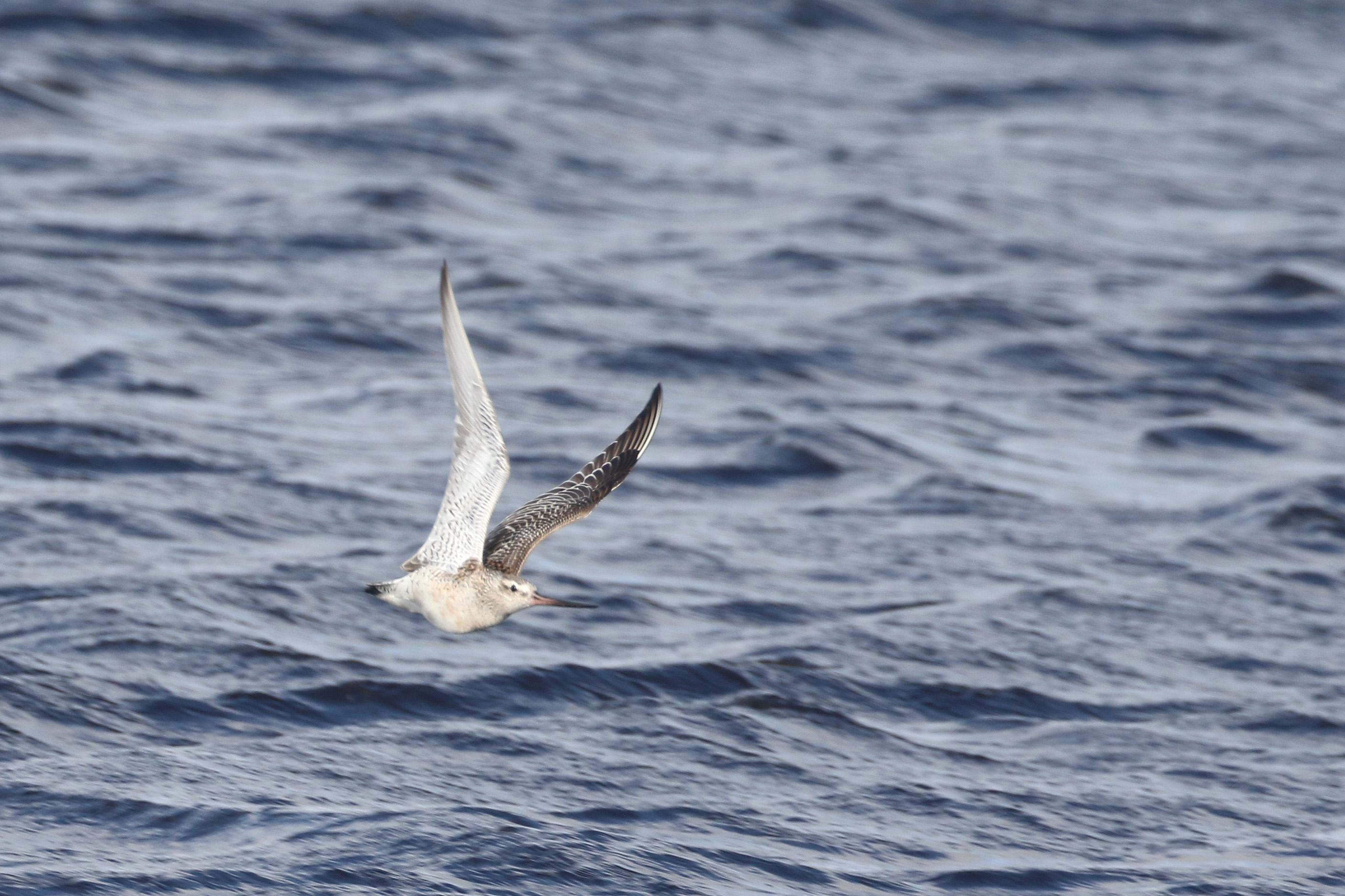
-Bar-tailed Godwit
-Arctic Tern

Ringstone Edge Reservoir

On the 24th, just over five minutes after the Bar-tailed Godwit flew through Whiteholme, another was reported on Ringstone. Since it was not a huge detour, and this bird seemed settled, I called in for a quick look. The extent of the white on the coverts from photos by John Marsh shows that this was a different individual from the bird at Whiteholme. 

-Bar-tailed Godwit

Species List:
Soil Hill: Canada Goose, Mallard, Grey Partridge, Common Pheasant, Red-legged Partridge, Feral Pigeon, Stock Dove, Common Wood Pigeon, Common Moorhen, Eurasian Oystercatcher, Northern Lapwing, Eurasian Curlew, Jack Snipe, Common Snipe, European Herring Gull, Lesser Black-backed Gull, Grey Heron, Eurasian Sparrowhawk, Common Buzzard, Common Kestrel, Peregrine Falcon, Eurasian Jay, Eurasian Magpie, Western Jackdaw, Rook, Carrion Crow, Coal Tit, Eurasian Blue Tit, Great Tit, Eurasian Skylark, Common Grasshopper Warbler, Sand Martin, Barn Swallow, Willow Warbler, Common Whitethroat, Eurasian Wren, Common Starling, Song Thrush, Common Blackbird, European Robin, Whinchat, Northern Wheatear, Dunnock, House Sparrow, Pied Wagtail, Meadow Pipit, Common Chaffinch, Eurasian Bullfinch, European Greenfinch, Common Linnet, Lesser Redpoll, European Goldfinch, Common Reed Bunting,
Whiteholme Reservoir: Greylag Goose, Canada Goose, Common Shelduck, Mallard, Eurasian Teal, Common Goldeneye, Goosander, Red Grouse, Common Pheasant, Eurasian Oystercatcher, European Golden Plover, Common Ringed Plover, Eurasian Curlew, Bar-tailed Godwit, Dunlin, Common Sandpiper, Lesser Black-backed Gull, Arctic Tern, Eurasian Jay, Carrion Crow, Northern Raven, Eurasian Skylark, Barn Swallow, Eurasian Wren, European Stonechat, Northern Wheatear, Pied Wagtail, Meadow Pipit, Common Reed Bunting,
Ringstone Edge: Canada Goose, Common Pheasant, Great Crested Grebe, Feral Pigeon, Common Wood Pigeon, Eurasian Oystercatcher, Northern Lapwing, Little Ringed Plover, Bar-tailed Godwit, Common Kestrel, Carrion Crow, Eurasian Skylark, Willow Warbler, Eurasian Wren, Pied Wagtail, Common Linnet, 

Wednesday, 25 August 2021

Soil Hill & Whiteholme; Week 23rd August - 29th August

Soil Hill

The autumn excitement continued to persist this week, despite gloomy and often quite breezy conditions. There continued to be a light scattering of migrants on offer, as well as a few nice oddball species. Visits were only managed on Monday, Tuesday and Wednesday due to my spending a long weekend at Spurn, but that was time enough to record a few goodies on the old patch.

Willow Warblers peaked with 10 on the 23rd, but remained present on each visit. Whitethroats were also present, but in much lower numbers, also peaking with 5 on the 23rd. Although it was a poor start to August for Tree Pipit, they have been fairly regular in the last week and so it continued. Frustratingly all the birds were either heard only or observed flyovers, with just one bird on the 25th actually spending any time on the deck. Scarcer drift migrants involved a single Whinchat at the bottom of the North Slope on the 24th, and then a Spotted Flycatcher on Taylor Lane on the 25th. Given that it is now the end of August, I was beginning to fret that Spotted Flycatcher might give me the slip this year, so it was a great relief to finally get one, although it was extremely elusive at all times. Grasshopper Warblers continued to be present in the long grass at the bottom of the North Slope. Typically elusive, it does appear to be two juveniles present.

There was sudden surge in Red-legged Partridge numbers, with a family at the bottom of the North Slope and another along Taylor Lane. The 23rd had a few more unusual species, with a Great Spotted Woodpecker flying north over Ned Hill Track, plus six Cormorant flying north over the North Slope and a flock of three Common Snipe blogging, presumably feeding on the wet fields at the bottom of the North Slope. On the 24th there was a minimum of four Grey Wagtails that flew south, but could have involved more birds blogging. 

-Spotted Flycatcher
-Whinchat
-Common Snipe

Whiteholme Reservoir

Due to the abridged nature of the weeks birding, I again only visited Whiteholme twice. The 23rd was a bust, although on the drive back I did have a rather smart Red Kite soaring over Baitings Reservoir, so not a complete loss. The 24th was much improved, with a smart juvenile Sanderling dropping in frustratingly briefly and at the north end of the reservoir where it could not have been much further away. Also on the 24th were two juvenile Little Ringed Plovers, as well as a juvenile Common Ringed Plover. The female Goldeneye continued to be present on both days, and was joined by three Eurasian Teal on the 24th. Wheatears were also present on both days.  

-Red Kite


Species List:
Soil Hill: Canada Goose, Mallard, Common Pheasant, Red-legged Partridge, Feral Pigeon, Stock Dove, Common Wood Pigeon, Common Moorhen, Common Snipe, Black-headed Gull, Common Gull, European Herring Gull, Lesser Black-backed Gull, Great Cormorant, Great Spotted Woodpecker, Common Kestrel, Eurasian Magpie, Western Jackdaw, Rook, Carrion Crow, Coal Tit, Eurasian Blue Tit, Great Tit, Eurasian Skylark, Common Grasshopper Warbler, Barn Swallow, Willow Warbler, Common Whitethroat, Eurasian Wren, Common Starling, Common Blackbird, Spotted Flycatcher, European Robin, Whinchat, Dunnock, Grey Wagtail, Meadow Pipit, Tree Pipit, Common Chaffinch, Common Linnet, European Goldfinch, Common Reed Bunting,
Whiteholme Reservoir: Eurasian Teal, Common Goldeneye, Red Grouse, Common Ringed Plover, Little Ringed Plover, Eurasian Curlew, Sanderling, Common Kestrel, Peregrine Falcon, Carrion Crow, Northern Raven, Eurasian Wren, Northern Wheatear, Meadow Pipit, 

Friday, 20 August 2021

Soil Hill & Whiteholme; Week 16th August - 22nd August

Soil Hill

Although I have thoroughly enjoyed my time birding on Soil Hill this year, it has never felt like it ever reached the heights of last year. Although there has been some nice birds, nothing has stood out and there have been precious few days when the Hill itself seems to have been alive with birds and potential, as enjoyable as it has been.

This week however, the Hill has really felt alive. Despite a difficult breeze on most days and often foggy and drizzly conditions, the birding has been exceptional, with a good scattering of migrant species almost every day.

To kick start the week I flushed two Grasshopper Warblers out of the long grass at the bottom of the North Slope on the 16th. These same birds were flushed every other day subsequently and on the 20th they were even reeling from the brambles. Also on the 16th were three juvenile Bullfinch along Ned Hill Track, but they did not linger during the week.

On the 18th while trying to spot a calling Coal Tit in the garden on Taylor Lane, an immature Common Restart jumped out onto one of the conifers, sat for a few seconds and then dived back in. A subsequent search only got me another brief view in half an hour, so I called it a write off and went to check the rest of the site. On my way back I had another look and finally spotted the frequenting a small area of the garden where it would occasionally dive out of cover onto the lawn before returning. The message on the grapevine brought JJL up from Bradshaw and together we watched the bird feeding. Whilst we watched a Red Kite drifted over us heading west, which was a real surprise given the windy conditions. A Great Spotted Woodpecker was also calling in the same area but I could not spot it.

The following day on the 19th, I was stunned to find that not only had the Common Redstart lingered, but it had now been joined by a second bird. When I passed at around 07:00 the two birds were frantically chasing each other round, but when I returned they had clearly drawn their lines in the sand, as each was operating from a separate end of the garden. Willow Warblers peaked for the week today, with nine, as did Wheatears with three. A pair of Collared Doves flew south over Taylor Lane, as did a Grey Wagtail, and a Sparrowhawk took out a Meadow Pipit in the field adjacent to the mast.

On the 20th just a single Common Redstart remained and it was being rather elusive. But there was a lot of birds to get through. On Ned Hill Track I had a Tree Pipit fly north calling which is only my second here this year. At the bottom of the North Slope the aforementioned Grasshopper Warblers were attempting to reel, and in the same area was a juvenile Sedge Warbler. And then to crown it all off was a cracking juvenile Whinchat on the fence line between the reservoir and the neighboring field. As seems typical with Soil Hill Whinchats, it made rapid progress along the fence-line before flying off down into the valley, but it did spend a short time flycatching, allowing me to get a proper view of it.

In summary, a fantastic week for Soil Hill! 

-Common Redstart
-Red Kite
-Whinchat

Whiteholme Reservoir

I made two visits to Whiteholme this week. The first on the 17th was a write off due to poor weather conditions but the second on the 19th was much more productive. As I was arriving AT was leaving and he commented that there was a wader on the centre ‘island’ but it was too difficult without a scope. Since I had my scope with me we has a check and spotted an absolutely stunning adult summer plumage Grey Plover. This is my second here this year, but the vastly improved weather meant that I could actually take time to enjoy this bird, rather than get frustrating glimpses through the fog. In the end it stayed present, feeding away for the hour that I was present. 

-Grey Plover


Species List:
Soil Hill: Canada Goose, Mallard, Common Pheasant, Red-legged Partridge, Feral Pigeon, Stock Dove, Common Wood Pigeon, Eurasian Collared Dove, Common Swift, Common Moorhen, Black-headed Gull, Common Gull, European Herring Gull, Lesser Black-backed Gull, Grey Heron, Eurasian Sparrowhawk, Red Kite, Great Spotted Woodpecker, Common Kestrel, Eurasian Magpie, Western Jackdaw, Rook, Carrion Crow, Coal Tit, Eurasian Blue Tit, Great Tit, Eurasian Skylark, Sedge Warbler, Common Grasshopper Warbler, Barn Swallow, Willow Warbler, Common Whitethroat, Eurasian Wren, Common Starling, Mistle Thrush, Common Blackbird, European Robin, Common Redstart, Northern Wheatear, Whinchat, Dunnock, Grey Wagtail, Pied Wagtail, Meadow Pipit, Tree Pipit, Common Chaffinch, Eurasian Bullfinch, Common Linnet, European Goldfinch, Common Reed Bunting,
Whiteholme Reservoir: Common Goldeneye, Red Grouse, Eurasian Oystercatcher, Grey Plover, Common Ringed Plover, Common Redshank, Eurasian Curlew, Black-headed Gull, Common Gull, Carrion Crow, Barn Swallow, Northern Wheatear, Meadow Pipit,

Monday, 10 May 2021

Soil Hill & Whiteholme; Week 04th - 09th May

Soil Hill
The birding on Soil Hill has been badly hampered by howling winds and cold temperatures. For a site more suited to passage passerines neither of these is particularly helpful but there were still a few nice bits to be found. First of these was a very very distant Whinchat on the 07th May, which was sadly all too brief. Wheatears featured throughout the week but were often distant on the bottom Cattle Fields. Overhead the migration was limited, with hirundines being limited to 2 Sand Martin on the 06th and a single House Martin on the 09th. A Swift also flew north on the 06th. Small groups of Siskin have been around the hill, with a group of 7 being the largest. Regular migrants have arrived and already established territories with some interesting Whitethroat behaviour observed on two occasions. The male will fly around the female within the bush uttering a bizzare whirring noise, which I have the intention to record once the wind drops. And finally rounding off the week, a drake Tufted Duck on the NK pond, only the second time I have seen this species here. Frustratingly it spent most of its time on the near shore out of sight.

-Whinchat

Whiteholme Reservoir
  On the 8th the weather was truly horrific, with gales and heavy rain and sleet. Since Soil Hill was a write off I decided to head up to Whiteholme to see if any birds were dropping in during the rain. And the endevour was rewarding with a nice total of 29 Dunlin and a single Sanderling. Sadly I could not give it so long due to the fact that I myself could not cope with the conditions and soon had to return home for some comforts. 
  That said, the two hours I had spent in the rain had wet my appetite so the following morning I headed up early doors to see the results of the storm. DF had just beat me there and recorded nearly 40 Dunlin, but when I joined him he informed me he was up to 69. It was indeed a fantastic sight with Dunlin dotted all along the shore line and filling the air with their buzzy calls. In addition there were at least 15 Ringed Plover. After a while DF had to leave and it was not five minutes after he headed down Blackstone Edge that an Arctic Tern appeared over the northern edge of the reservoir. It made slow progress south, allowing for some excellent views of the bird before I lost it. After this I decided to walk the length of the mud, click-counting the Dunlin and I reached an excellent total of 72 individuals. There were also 2 Sanderling here, which I compared with photos of the previous days individual and both appear to be new birds. After another hour of watching I decided to head off, when a Pink-footed Goose dropped in. Initially the bird caused me confusion, due to it being May, but photos confirmed the ID. It sat on the bank for 10 minutes before it too headed off strongly south. In conclusion, it truly has been a memorable weekend. 
-Sanderling
-Dunlin
-Dunlin & Sanderling
-Arctic Tern
-Sanderling
-Dunlin
-Pink-footed Goose

Species List:
Soil Hill: Canada Goose, Mallard, Tufted Duck, Red-legged Partridge, Common Pheasant, Feral Pigeon, Stock Dove, Common Wood Pigeon, Common Swift, Common Moorhen, Eurasian Oystercatcher, Northern Lapwing, Eurasian Curlew, Common Snipe, Black-headed Gull, European Herring Gull, Lesser Black-backed Gull, Great Cormorant, Grey Heron, Eurasian Sparrowhawk, Little Owl, Peregrine Falcon, Eurasian Magpie, Western Jackdaw, Rook, Carrion Crow, Great Tit, Eurasian Skylark, Sand Martin, Barn Swallow, Common House Martin, Willow Warbler, Common Whitethroat, Eurasian Wren, Common Starling, Mistle Thrush, Common Blackbird, European Robin, Whinchat, Northern Wheatear, Dunnock, House Sparrow, Pied Wagtail, Meadow Pipit, Common Chaffinch, European Greenfinch, Common Linnet, European Goldfinch, Eurasian Siskin, Common Reed Bunting,
Whiteholme Reservoir: Greylag Goose, Pink-footed Goose, Canada Goose, Mallard, Red Grouse, Common Swift, Eurasian Oystercatcher, Northern Lapwing, Common Ringed Plover, Little Ringed Plover, Eurasian Whimbrel, Eurasian Curlew, Sanderling, Dunlin, Common Sandpiper, Black-headed Gull, European Herring Gull, Lesser Black-backed Gull, Arctic Tern, Common Buzzard, Carrion Crow, Eurasian Skylark, Barn Swallow, Eurasian Wren, Northern Wheatear, Pied Wagtail, Meadow Pipit,