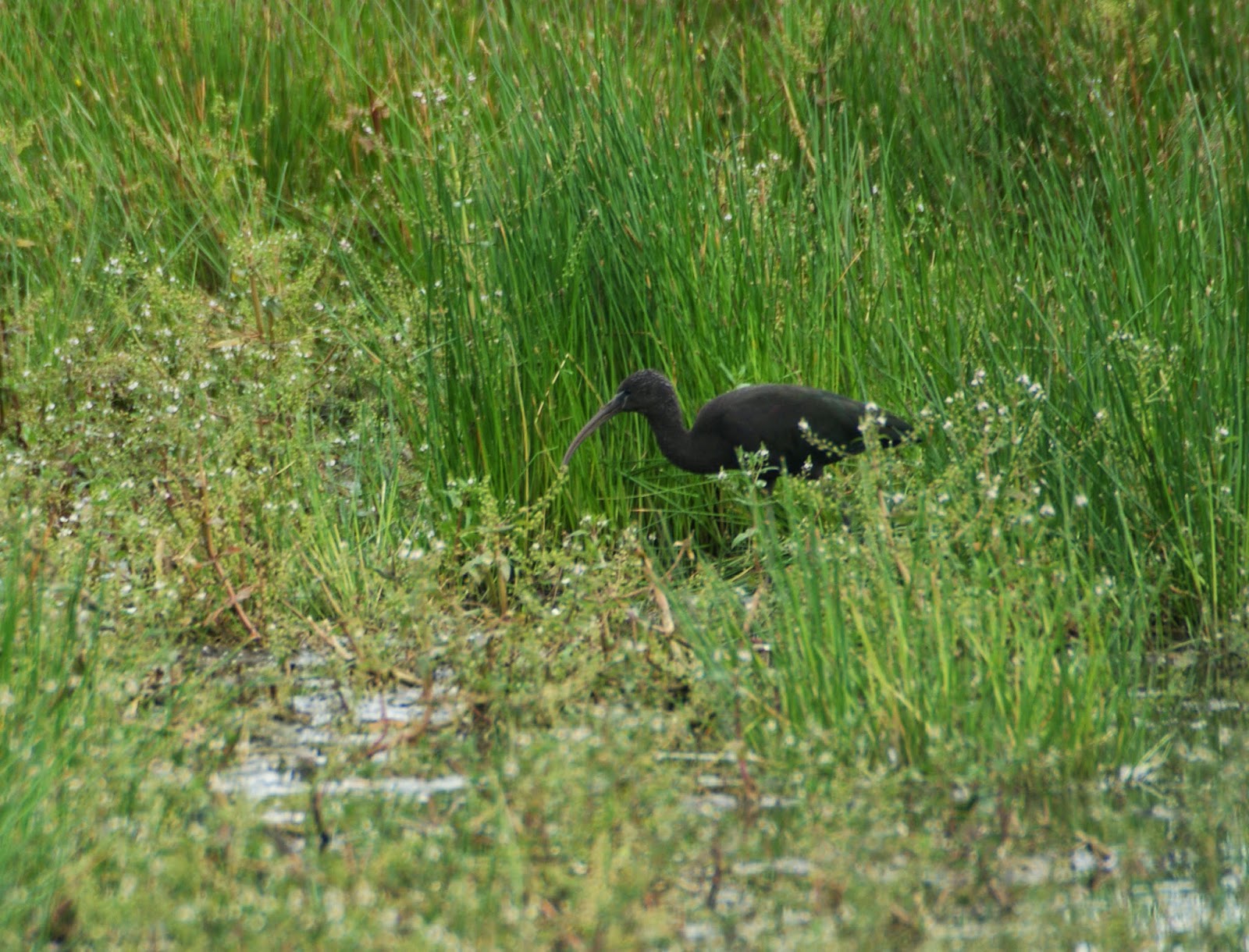
Showing posts with label Tit-Willow. Show all posts

Saturday, 20 August 2022

Cromwell Bottom twitching Willow Tit

 We awoke to see that news had circulated overnight of a Marsh Tit visiting the feeding site at Cromwell Bottom. The birder was not involved with the Calderdale Bird group, but the photos showed the bird clearly. Lia and I headed to Soil Hill as usual, hoping that someone more local would be able to confirm the bird was still present but by 09:00 no news had reached us, so we decided to go for it regardless of news, and it is a good thing that we did. 

 As we arrived another birder was already present at the feeding site. He stated that the bird had not been seen by him, but that he had only been there for half an hour. Less than 10 minutes into our stay the bird appeared on the bird table at the right side of the feeding site. It then spent a few minutes traveling around the feeding site visiting a number of different feeders and often showing well. It then left for around 10 minutes before it returned, but only travelling through the canopy and not visiting the feeder.

 It took another 20 minutes or so for the bird to return to the feeding station, during which time DF, JM and DJS had all arrived, and we were all able to enjoy the bird as it showed very well at times. We all agreed that the smaller bib and pale spot at the base of the bill made this bird a Marsh Tit rather than a Willow Tit. Frustratingly, it never called in the hour that we stayed. 

And unfortunately had we heard the bird call we would have been able to identify it there and then as a Willow Tit. Instead it took a week before a researcher who stuides this species pair corrected the identification based on photos I posted on Twitter. Whilst still a Halifax tick for me, Marsh Tit is a much rarer bird in West Yorkshire and I had hoped that the initial identification had been correct.

 After the feeding station, Lia and I had a short walk round and we found a nice Kingfisher, but it was a Saturday so the site was full of dogs and kids, so we decided to call it a day and head back home. 

-Willow Tit

Species List:
Cromwell Bottom: Mute Swan, Mallard, Common Wood Pigeon, Great Cormorant, Eurasian Sparrowhawk, Common Kingfisher, Great Spotted Woodpecker, Eurasian Magpie, Coal Tit, Willow Tit, Eurasian Blue Tit, Great Tit, Long-tailed Tit, Eurasian Blackcap, Eurasian Nuthatch, Eurasian Treecreeper, Eurasian Wren, European Robin, Dunnock, Grey Wagtail, Common Chaffinch, Eurasian Bullfinch, European Goldfinch, 

Tuesday, 23 June 2020

RSPB Aire Valley

With the return of the warm weather I decided to have a day out at RSPB Fairburn Ings followed by a visit to Swillington Ings. Fairburn was lively with lots of Wildfowl and other water birds but the highlight was certainly the Heronry which I viewed from the Coal Tip Trail. Here I got excellent views of at least eight Spoonbill, as well as ample Little Egret and Grey Heron, plus the single summer plumage Cattle Egret that had been lingering at the site for over a week. An adult and juvenile Willow Tit were the best of the supporting cast, with nice views of Shelduck and Little Ringed Plover as well.
-Willow Tit
-Spoonbill, Little Egret & Grey Heron
Swillington was very busy and since it was early afternoon it was also very warm but I still managed to see Bearded Tit, albeit breifly, and a single adult Black-necked Grebe with a chick. The site hosts an impressive Black-headed Gull colony, so the overall numbers of birds were still extrmemely impressive despite the afternoon lul.

Species List:
RSPB Fairburn Ings: Greylag Goose, Canada Goose, Mute Swan, Common Shelduck, Gadwall, Mallard, Eurasian Teal, Common Pochard, Tufted Duck, Common Pheasant, Little Grebe, Great Crested Grebe, Stock Dove, Common Wood Pigeon, Common Swift, Common Moorhen, Eurasian Coot, Pied Avocet, Northern Lapwing, Little Ringed Plover, Common Sandpiper, Black-headed Gull, Common Tern, Great Cormorant, Grey Heron, Little Egret, Western Cattle Egret, Eurasian Spoonbill, Common Buzzard, Eurasian Magpie, Western Jackdaw, Carrion Crow, Coal Tit, Willow Tit, Eurasian Blue Tit, Great Tit, Sedge Warbler, Eurasian Reed Warbler, Sand Martin, Barn Swallow, Common House Martin, Willow Warbler, Common Chiffchaff, Cetti's Warbler, Eurasian Blackcap, Common Whitethroat, Eurasian Wren, Common Starling, Common Blackbird, European Robin, Dunnock, Pied Wagtail, Common Chaffinch, Common Linnet, European Goldfinch, Common Reed Bunting, Grey Squirrel, Small Tortoiseshell, Red Admiral, Ringlet, Meadow Brown, Small Skipper, Small White, Banded Demoiselle, Black-tailed Skimmer,
Swillington Ings: Greylag Goose, Canada Goose, Mute Swan, Northern Shoveler, Gadwall, Mallard, Common Pochard, Tufted Duck, Little Grebe, Great Crested Grebe, Black-necked Grebe, Stock Dove, Common Wood Pigeon, Common Moorhen, Eurasian Coot, Eurasian Oystercatcher, Northern Lapwing, Black-headed Gull, European Herring Gull, Lesser Black-backed Gull, Common Tern, Great Cormorant, Grey Heron, Common Buzzard, Common Kestrel, Eurasian Magpie, Western Jackdaw, Carrion Crow, Bearded Reedling, Sedge Warbler, Eurasian Reed Warbler, Sand Martin, Willow Warbler, Common Chiffchaff, Cetti's Warbler, Long-tailed Tit, Eurasian Blackcap, Common Whitethroat, Eurasian Wren, Common Starling, Common Blackbird, European Robin, Meadow Pipit, Common Linnet, European Goldfinch, Common Reed Bunting, Black-tailed Skimmer, Emperor Dragonfly, Blue-tailed Damselfly,

Friday, 4 July 2014

Fairburn Ings

My time at uni is drawing near to an end for good for the summer. Since it is 'Le tour' this weekend I decided to make today my final major birding trip due to the number of road closures over the weekend. I decided to try a new site, for public transport at least, by going to Fairburn Ings RSPB. Its a site where I have had mixed fortunes before, dipping smew 3 years in a row, but I had not been for some time.
Reports showed that there were 2 spoonbills on site, that had been around for some time, which was the main reason I thought to go and have a look, but the glossy ibis that has been roving around west and South Yorkshire had recently made it is home. As a result I decided to head over that way to enjoy my last bit of proper first year birding.
Despite its steep train fare I did not have to get a bus, as I can walk to the site from Castleford, so that was a major bonus. Once out of the town you follow the canal for a short distance before going onto the RSPB land.
It was walking along the canal that I had Mallard, Swallow and Mute Swan on the canal and woodpigeon on the overhead cables over the hedge. Or so I thought. I don't really know what inspired me to check out this so obvious woodpigeon on the wires, but for some reason I gave it a thorough inspection. It was difficult from my range, and my head secretly wanted turtle dove, so I allowed myself all kinds of thoughts. When I managed to get a decent view through the bins I immediately noticed a lack of white round the neck. Woodpigeon no more. I still struggled to make anything out with my bins though, so got the camera and grabbed a record shot. I could not believe my eyes when I had a look, it was a Cuckoo, chilling on the wires. I got closer until I was right in front of it, the hedge providing a suitable hide. Its my first good shots of a Cuckoo landed, and it is also one of my best self finds. To find a Cuckoo at this time of year, on a site not reknown for its cuckoos, is something pretty special. I was well pleased with myself. I had a good look through the bins, before taking some shots and then going for the bins again. But it was between the transition of camera to bins that the bird moved off, as it was no longer there when I looked up again. I don't know where it went, but it made my day, and it was not even lunchtime.  
-Cuckoo
I continued onto the reserve, and decided to first call in at Lin Dyke Hide, as that was where the ibis and spoonbills were most frequently recorded. As I left the riverbank and headed up towards the hide I noticed 2 large white birds circling near the farm in the distance. Of course my first thought was swans, but through the bins I could see that they were not swans, they were in fact the Spoonbills that I had come to see. The scope was in my bag, and through the bins there was not much to make out except for their long neck and broad wings and tail. I grabbed a ton of record shots of the birds, since I had no idea what their next move would be, and good thing too, as they quickly dropped down below the tree line. They are my 17th lifer this year, and a bird I have long wanted to see. Sadly because of distance I could not make out the bills properly, but I had hope that over the course of the day I would find them again.
-Spoonbills
Now I was really buzzing and it was about to get even better. Not much further up than from where I saw the spoonbills I noticed a large bird fly towards me over the reeds to the right of the hide. It was clearly a heron and because the neck was tucked in from such a low flight I identified it as a bittern. A quick check with the bins showed I was right, but it also showed that the bird was coming towards me. I grabbed the camera due to the potential of some great shots, just in time for the bird to gain altitude and fly right over me. Great shots? you bet, it was without doubt the greatest view of a bittern I have ever had, beating even those birds that I have seen landed. I think it would only be right to let the pictures do the talking.
-Bittern
The bittern flew over the path and then was lost behind the trees. I had barely made it on site and already it was one of the best days birding this year, and that is saying something. I made it to the hide without further incident, but that's not saying much due to the short distance. I began looking for the ibis, or to see if the spoonbills had landed. The latter had not and the former was not to be seen. I did not want to ask other birders, as it removed some of the pride from any sighting, but from tactical eavesdropping I learned that it was in a pool just up the path.
From the hide there was good stuff to find, including many waterfowl; Common Teal, Shoveler, Gadwall and more Mute Swans. On the banks there were Lapwing, Redshank with a well grown chick and a few Little Egrets, which were showing really well. After some continued searching I found a few Little Ringed Plover on an island quite far out, and was going to announce them with pride, when I noticed a small bird right in front of the hide have a stretch. There had been a Little Ringed Plover with a well grown chick right in front of the hide all along, and nobody had noticed. They were even close enough to get some decent record shots.
-Little Ringed Plover
After my stay in the hide I decided to head up to check out the Ibis and see if it showing. I saw the small cluster of birders on the path, but could not see the bird due to the hedge. I saw the pool next and was shocked by how close it was to the path, as in really close. There were also about 10 Little Egrets on the pond, which being so close and so unfazed looked absolutely great, the best views I can ever recall having.
After a short while the ibis raised its head, it had been feeding at the back out of view. It was moving closer though, but keeping to the reeds and sedges, making it difficult to photo, or even see. This is of course the same bird that I twitched at Wombwell Ings, before exams and all that fun. That seems so long ago, and compared to how close the bird was currently seems completely independant of this encounter.
While I waited upon the ibis to yield a great view I noticed a pair of Whitethroat that had been moving around the hedge in front, probably disturbed by the small cluster of birders. I decided to back off to avoid causing them more harassment. Once back the birds started landing in very nice positions for a photo of Whitethroat for this year.
-Whitethroat
As I had mentioned before there were many Little Egrets all showing well. While photographing the Whitethroat I had noticed to my horror that my camera battery was very very low. Even so, I decided it was too good and opportunity to miss, so took a few photos of the egrets while they were in nice positions.
-Little Egret
But of course, the bird of the hour was the ibis. After waiting a little while it decided to finally come out and show itself in all its glory. It was a different perspective to the view I had got at Wombwell, here really highlighting the grey streaks on its head and the the green and purple sheen on the bird. It carried out all kinds of behavior, mainly feeding but also preening which was a different perspective of the bird.
-Glossy Ibis
I got so many better pictures of the Ibis than before, the fourth awesome bird that I have seen already today. After a while I decided to move on to try and re-find the Spoonbills further up the reserve. I had initially decided to walk along the river, but the spoonbills had changed that and I decided to walk along the road to see if I could find them further up.
Before the road I added Willow Warbler to my day list, and Wren too, which was singing with great gusto from the hedge. Once on the road the birds naturally declined. Overlooking the Spoonbill Flash I did not get many additions as most of the birds could be seen from the hide. However, there were some ducks resting hidden next to the road which I failed to see due to me being distracted by a Sedge Warbler. One of the ducks was a Pochard female, which I took a couple of photos of due to it being so close.
-Female Pochard
I continued along the road, reaching the area that overlooks the moat. However, the spoonbills could not been seen. What did impress me were the number of Cormorants. They were everywhere, on the trees, on the bank, in the water even flying overhead. I was very surprised by how many there were.
I moved off and entered the car park area of the reserve. I first headed down to the main bay lookout point near the car park to see if there was anything there, as there has been some decent stuff in the past. Today it was very quiet though, mainly eclipse mallards. There was also a female Mandarin which was different, a lovely male reed bunting giving it Gusto from the reedbed and a couple of Common Terns hunting out over the bay.
After a short stay at the feeding station my next call was the Pickup Hide for lunch. On the feeding station there were Blue Tits, Great Tits and Tree Sparrows, nothing particularly unusual, nor were there any willow tits which I really wanted to see.
Fortunately at the Pickup Hide there was a Willow Tit, a very aggressive individual that was chasing all other birds on the feeders. Besides that there was not much about. The Sand Martin wall in front of the hide was quite busy, with a few birds drifting in and out at regular intervals. There were also about 5 Avocet on the bank, I am informed a pair with chicks. A Stock Dove also joined in at one point for a drink, but it was very quiet. I tried for some record shots of the Willow Tit but it was very dark and they did not come out well. Never mind.
-Willow Tit
-Tree Sparrow
Once I had moved on from Pickup I decided to take a look at the hide overlooking the main bay before returning to Lin Dyke via the river. In that hide there was not much, but there were good numbers of Great-Crested Grebes on the lake, most of which were sleeping. On the way to the hide I also picked up Chiff-Chaff and Long-Tailed Tit, the latter being a regular at the site.
Along the river it was very quiet. There good numbers of Cormorants in the river, and a Grey Heron on the bank. It was mainly the insects along the bank that were the highlight, with many species of butterfly; Ringlet, Gatekeeper, Small and Large Skipper, Red Admiral, as well as a couple of dragonfly species; a spectacular Four-Spot Chaser and a Black-Tailed Skimmer on the path.
-Four Spot Chaser
-Black-Tailed Skimmer
 I re-arrived at Lin Dyke hide intending to stay a little while and then go and re-find the ibis. However, not long into my stay at the hide and a birder came in and informed us that the ibis had moved on, apparently we should have seen it from the hide, but failed. So I spent all my remaining time in this hide waiting for something to appear.
And right on cue the Spoonbills decided to do another flyby, but this time I opted to watch them rather than photograph them. Even through the scope it was difficult to see that beak, but I certainly got a better view than I had got before, and I was glad I saw them again before I left for the train. Once they had gone down again I returned to try and see what else was about. The fore mentioned birder had spoken about Common Sandpiper, and right on cue a Common Sand came and landed on one of the pieces of wood on the lake, another great day tick. There was a tree in the middle of the flash, and while I watched this tree became frequently covered in Sand Martins, before something would cause them to flush and they would all leave. But the real stars again were the Little Ringed Plovers, which once more were right in front of me, but I was unable to spot them for a good half an hour. It then turned into a nightmare trying to describe their location to the other birds, who could not believe how well hidden they were, despite being out in the open.
-Little-Ringed Plover
It came to the time when I had to go for the train sadly, and I departed. On the way back I picked up another Grey Heron and a Pheasant but not much. It truly had been a great day, really enjoyable. And with another lifer, and catching up with that Glossy Ibis what more could a birder really ask for.

Species List:
Fairburn Ings RSPB: Spoonbill, Bittern, Little Egret, Grey Heron, Glossy Ibis, Starling, Dunnock, Chaffinch, Blue Tit, Magpie, Carrion Crow, House Sparrow, Blackbird, Blackcap, Great Tit, Robin, Common Pheasant, Black-Headed Gull, Wren, Mallard, Jackdaw, Mute Swan, Feral Pigeon, Woodpigeon, Mistle Thrush, Bullfinch, Goldfinch, Pied Wagtail, Kestrel, Collard Dove, Lapwing, Long-Tailed Tit, Tufted Duck, Cormorant, Moorhen, Coot, Great-Crested Grebe, Jay, Common Teal, Shoveler, Gadwall, Pochard, Redshank, Greenfinch, Tree Sparrow, Reed Bunting, Stock Dove, Willow Tit, Oystercatcher, Chiffchaff, House Martin, Little-Ringed Plover, Sand Martin, Willow Warbler, Scaup, Canada Goose, Graylag Goose, Avocet, Sedge Warbler, Common Sandpiper, Common Tern, Whitethroat, Swift, Cuckoo, Small Skipper, Large Skipper, Meadow Brown, Large White, Gatekeeper, Ringlet, Speckled Wood, Common Blue Damselfly, Common Blue-Tailed Damselfly, Brown Hawker, Black-Tailed Skimmer, Common Darter, Four-Spot Chaser, Common Toad,

Saturday, 8 February 2014

Smawthorne Marsh - Twitching Firecrest

My intention today was to get the firecrest in the morning, a bird I had long wanted to see, at Smawthorne marsh in Castleford and then go to Swillington for the Siberian chiff-chaff in the afternoon, since I was already quite close.
  Things did not turn out like this however, as I spent a good four hours hunting for the firecrest with no joy at all. I was heartbroken. There were other birds at the site, but they were mainly garden birds, with some nice more unusual garden type birds.
-Willow Tit - My first of the year
-Long Tailed Tit
-Bullfinch
-Goldcrest
-Sparrowhawk
-Goldfinch
-Greenfinch
-Chaffinch
-Blue tit
-Great tit
-Coal tit
-Blackbird
-House Sparrow
-Magpie
-Carrion Crow
-Woodpigeon
Because I spent so long looking for the firecrest I did not make it for the sibe chaff, but I figured it was only a small brown bird and probably not worth the extra expense for potentially more disappointment

Tuesday, 3 April 2012

Grange-Over Sands holiday Day 3

After almost three weeks, it decided to rain. It was a pity it had to be today, when we were on holiday and not when I was tuck at home revising. However, because of the rain my family decided that they would go to a naval museaum in Barrow, but said I could get the train to leighton moss if I wanted, because there is a train station close to the reserve.
I Arrived at Silverdale station and checked a map to see which direction would lead me to the reserve. I luckily chose the right way, as i dont remeber a golf course or a train line anywhere near the reserve from last time. Right away upon entering the car park, often filled with phesants, but none this time. There was however a Willow tit on one of the peanut feeders, which was a great start.


-Willow Tit
I got into the reserve and went staright to the big first hide, Lilian's, mainly because it has heating. I got in and began to take record shots of all the birds there, before having a scan across the reedbeds, that diddnt produce much else.


-Common Teal


-Dabchick/Little Grebe


-Tufted Duck
There was also an assortment of black-headed gulls and mallards. I stuck around for a while to see what would show up, and I was not dissapointed. I was watching the reedbeds when I overheard somebody mention snow goose, and at the same time a white bird emerged from the reedbed and began to fly above it, but some way off. I couldn't beleive it. I managed a few shots as it flew over towards the other hides, public and lower, before dipping below the reeds.


-Snow Goose
Excited I headed off towards that section of the reserve to see if I could catch up with it. On the way there i had a look at the feeders and was rewarded with views of a bullfinch pair


-Bullfinches
Heading down the causeway I was hearing wierd noises from the reedbed, but could only find coots and graylag geese, which were quite abundant. I also managed to find my first swallow of the year!


-Swallow
On my way down the causeway i spotted the snow goose flying away, back to where it came. Gutted I enetred public hide to see what was going on in there. I found some other wildfowl, including my first pochard of the year and a goldeneye pair fishing at the back of the lake.


-Pochard
I also spotted my first marsh harrier of the day in that hide, but it diddnt stick around for a photo. So I left Public hide to see what was at lower hide. To this day, lower hide has been the poorest hide on the reserve, however that diddnt mean that it wasnt worth a look. Just past public hide there was a as small river, where there was a heron fishing.


-Grey Heron
There were other birds as I made my way down the causeway, like lapwings, but I still could'nt find any trace of the snow goose, so i reckoned that it must be in one of the lakes that wasnt visable from the hides. I had it confirmed in public hide that it was a snow goose from my photo by some other birder. The conversation was prompted by somebody asking what the large white bird that he had seen flying round that area earlier could have been, a snow goose apparently!


-Lapwing
Off the footpath and walking down through the woods to lower hide produced a chiffchaff singing and a blackcap also singing


-Chiffchaff
Lower hide wasn't great, but did have some nice things, such as a wren singing outside. It also had a pair of grebes doing a courtship dance in the background, and lots of teals in the foreground. There was also a marsh harrier seemingly hunting some greylag geese, which, if it was, failed to catch any.

On my way back I called in at public hide again to see if there was anything going on. I noticed that one of the grebes I had seen dancing at lower hide had come to rest on one of the islands quite close to the public hide, so i could get a record shot for the day.


-Great crested grebes
Back on the causeway and once more there were plenty of marsh harriers to keep me interested, but the photos of marsh harriers from the day will come up later. It was however another raptor that caught my attention, in a buzzard that was flying high above.


-Buzzard
At the top of the causeway A deer ran out infront of me, but I wasnt quick enough with my camera to get a photo of the deer, instead I had to make do with a photo of its leg, not included for obviouse reasons.

Back at Lilians hide I sat down to have my lunch, and see if the snow goose would make a re-appearance. I was enetrtained, in the days only breif sunshine window, by a heron hunting in front of the hide. It then took off and flew right in front of us, offering me a great chance to get some photos.


-Grey Heron
Most of lunch was spent watching marsh harriers in the distance, while otherbirders argued wether or not they were male, female or buzzards. In the meantime I spotted another species of wildfowl drop in the shape of a gadwall pair


-Gadwall
i was just wrapping up with my lunch when the goose re-appeared and once more went over towards public hide. So once more I followed suit. I noted that it had gone down to the small narrow waterway that i had spotted a grey heron in earlier. I also noted the prescence of a dark cloud mass coming in, and assessed that during the walk it was very likely I would get heavily rained on. It was a risk worth taking.

And as i walked down the causeway I spotted a marsh harrier that was actually worth attempting to a take a photo off. It was a good thing I did, because they came out well. Possibly my new favoiurite marsh harrier photos


-Marsh Harrier
I reached the area where I reckoned the goose was, and was dissapointed to notfind it there. I took a photo of the waterway though, and it just goes to show how dark it was under the cloud.


-Waterway under a dark cloud
On the way back up the causeway I spotted a marsh tit in the flooded woody bit at the top, and it allowed me to get my best ever marsh tit photos.


-Marsh Tit
I made my way all the way to Griesdale hide at the other end of the reserve for a look at what was there. I just made it in time before the heavens finally opened. The poor birds all looked pretty miserable in the rain!

I had a look around and spotted another couple of wildfowl species for the day in wigeon and shoveler, a well as teal. The wigeon were well at the back under a tree, but the shoveler were quite bold and tame and were swimming around in front of the hide readily.


-Wigeon


-Shoveler
I was just about to leave to make sure i got my train back, when a guy next to me with a big camera suddenly spotted a bittern right out in the open on the reedbed on the far side. It was the best view of a bittern I have ever had, but at the point of maximum viewing, as it were, I opted to watch it instead of photograph it. I did, however, give me agreat view of a bittern


-Bittern
I called in at the main hide as I had a bit of time, and was rewarded by some birders noting that some small dots in the distance were sandmartins, and that one brighter white blob was an early house martin, which was very nice. I recorded all my first hirundines of the year in the same day.

I stopped off at the birdfeeding station on my way to the station just for a quick look. I was rewarded with great views of a male bullfinch, plus a baby rabbit and a couple of female phesants. Which was a nice ending to the day.

-Bullfinch

So ends the day for then, and i made it to my train, in the rain, and made it to grnage and got a lift back from a succesful day.

N.B There was always a nagging doubt about said snow goose. It just seemed too good to be true, and lo and behold, on birdguides it is regarded as an escape, so it is not my new tick for the holiday. Pity really, as it was quite nice to see.